
Duplin County Probate Records
Probate in Duplin County means estate administration through the Clerk of Superior Court. The clerk acts as probate judge for many estate functions. The office handles wills, applications, letters testamentary, letters of administration, inventories, accountings, creditor claims, orders, receipts, distributions, and closing documents. Special proceedings can also include guardianship, incompetency, partitions, caveats, and related clerk matters that may later require hearings or transfer to a judge.
The official N.C. estates help topic says the first practical step is to locate the will. Wills may be in safes, safe deposit boxes, locked desks, with an attorney, or deposited with a clerk of court for safekeeping. If no will is found, users may need to check counties where the decedent formerly lived. A North Carolina resident's estate is administered where the decedent was domiciled at death. A nonresident estate may be administered in a North Carolina county where property or assets are located or came into the estate.
The N.C. estates help topic is the manifest source for North Carolina estate administration guidance.
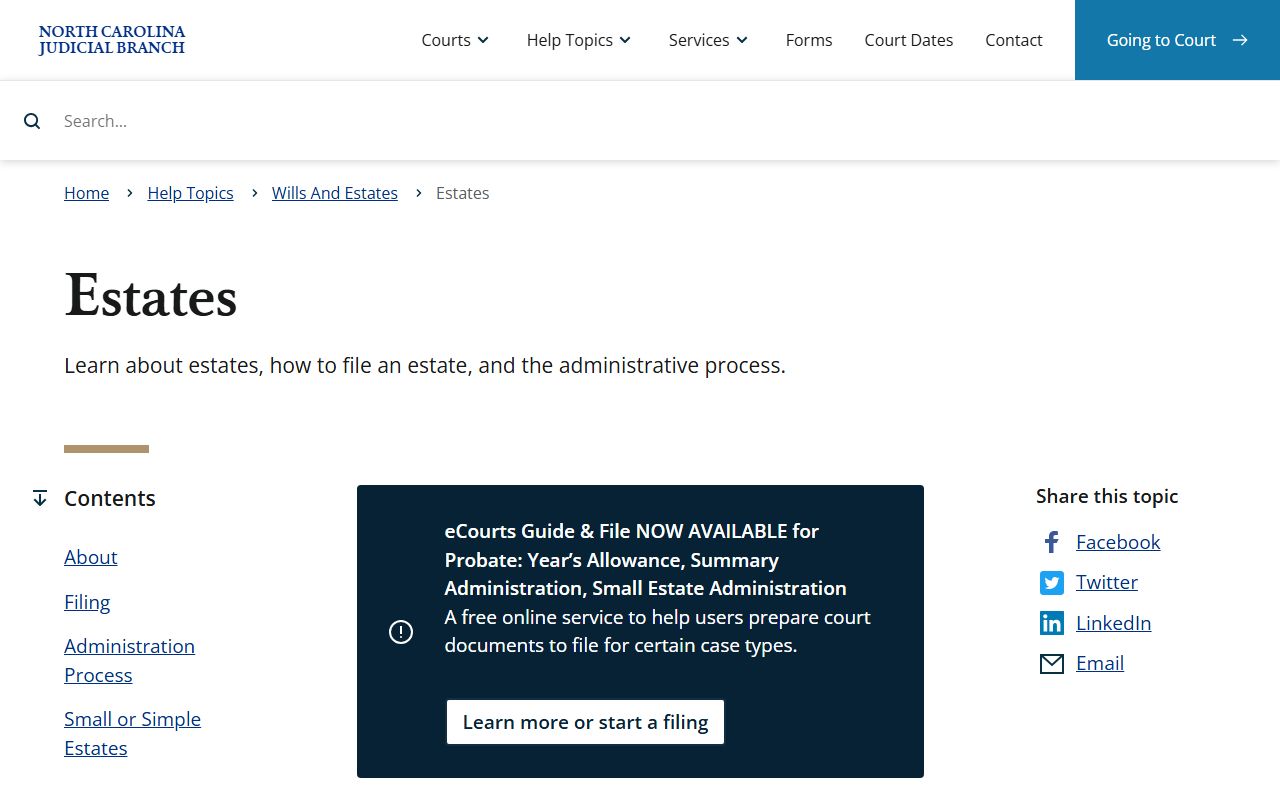
That statewide estate resource explains why Duplin County estate records are clerk matters rather than filings in a separate probate court.
Duplin Probate Terms Defined
Estate files use terms that can be confusing because North Carolina probate work is handled by the clerk while still producing court records. These short definitions help separate the person who died, the person asking for authority, and the process used when no will controls the estate.
- Testator
- A person who made a will before death.
- Executor
- The person named in a will to carry out estate duties after the clerk grants authority.
- Administrator
- A person appointed when there is no valid will naming an executor, or when the named executor cannot serve.
- Intestate
- Dying without a valid will, so property passes under North Carolina intestacy rules.
- Letters
- Letters testamentary or letters of administration are clerk-issued authority for the personal representative.
- Guardianship
- A court-supervised arrangement for a minor or an adult found incompetent, handled through clerk and court processes.
Search Duplin Estate Records
Search estate and special proceeding summaries in the N.C. eCourts Portal Smart Search when the case is available online. Portal training says Smart Search covers Civil Actions, Special Proceedings, Estates, and Criminal Actions under the clerk recordkeeping framework. Search by decedent name, estate case number, personal representative, party name, or other available criteria. If the Portal summary is thin, use the Clerk of Superior Court in Duplin County for paper files and copies.
- Open the N.C. eCourts Portal and choose Smart Search for case information.
- Search by decedent name, estate case number, personal representative, or party name.
- Filter to Duplin County when the Portal offers a location filter.
- Review the case summary, events, parties, and estate-related entries that appear.
- Contact the Clerk of Superior Court for paper estate files, certified copies, safekeeping wills, older files, or unclear Portal results.
Access is not limited to online search. Public terminals in clerk offices can be used for estate, civil, special proceeding, and criminal case information, and paper files are inspected in the county where the case is located.
Duplin Estate Clerk Contact
There is no separate Duplin County probate court. The local office is the Clerk of Superior Court at the Duplin County Courthouse. Use this office for estate openings, wills after death, letters, paper file inspection, certified copies, and special proceeding questions. Do not contact the Register of Deeds for estate administration, although deeds and land records tied to an estate may be in the ROD system.
Duplin County Clerk of Superior Court
Duplin County Courthouse
112 Duplin Street
Kenansville, NC 28349
(910) 275-7000
Monday-Friday, 8:30 a.m.-5:00 p.m.
Mailing: PO Box 189, Kenansville, NC 28349
Duplin Probate Filing Fees
The current court-cost source publishes estates and special proceedings PDFs for 2026. The research located several estate-cost amounts, but final cost should still be checked against the current PDF or the clerk before filing because gross estate fees and service fees can depend on the estate and proceeding.
| Estate Item | Amount Found in Research |
|---|---|
| New estate administration | $120. |
| Gross estate fee | $0.40 per $100, with $15 minimum per filing and $6,000 maximum cumulative. |
| Probate of will without qualification | $30. |
| Collection by affidavit | $120 plus gross estate fee. |
| Motion / notice of hearing | $20. |
| Sheriff civil process | $30. |
What Duplin Estate Records Show
Duplin County estate records can show the legal steps taken after death. A full estate file may include the application for probate or administration, will and codicils, proof of will, certificate of probate, letters, inventory, annual or final accountings, notices to creditors, claims, clerk orders, receipts, releases, distributions, and closing documents. A simplified process can create a shorter file, while contested issues can create a larger case history.
| Record Field or Filing | What It Shows |
|---|---|
| Decedent name | The person whose estate is being administered. |
| Will or codicil | The testamentary document offered for probate, if one exists. |
| Letters | The clerk-issued authority for the personal representative. |
| Inventory | Reported estate assets and values at the required filing stage. |
| Accountings | Annual or final reports of estate receipts, costs, claims, and distributions. |
| Orders | Clerk rulings or court orders in estate or special proceeding matters. |
The estate applications statute article is the manifest source for application and letters authority context.
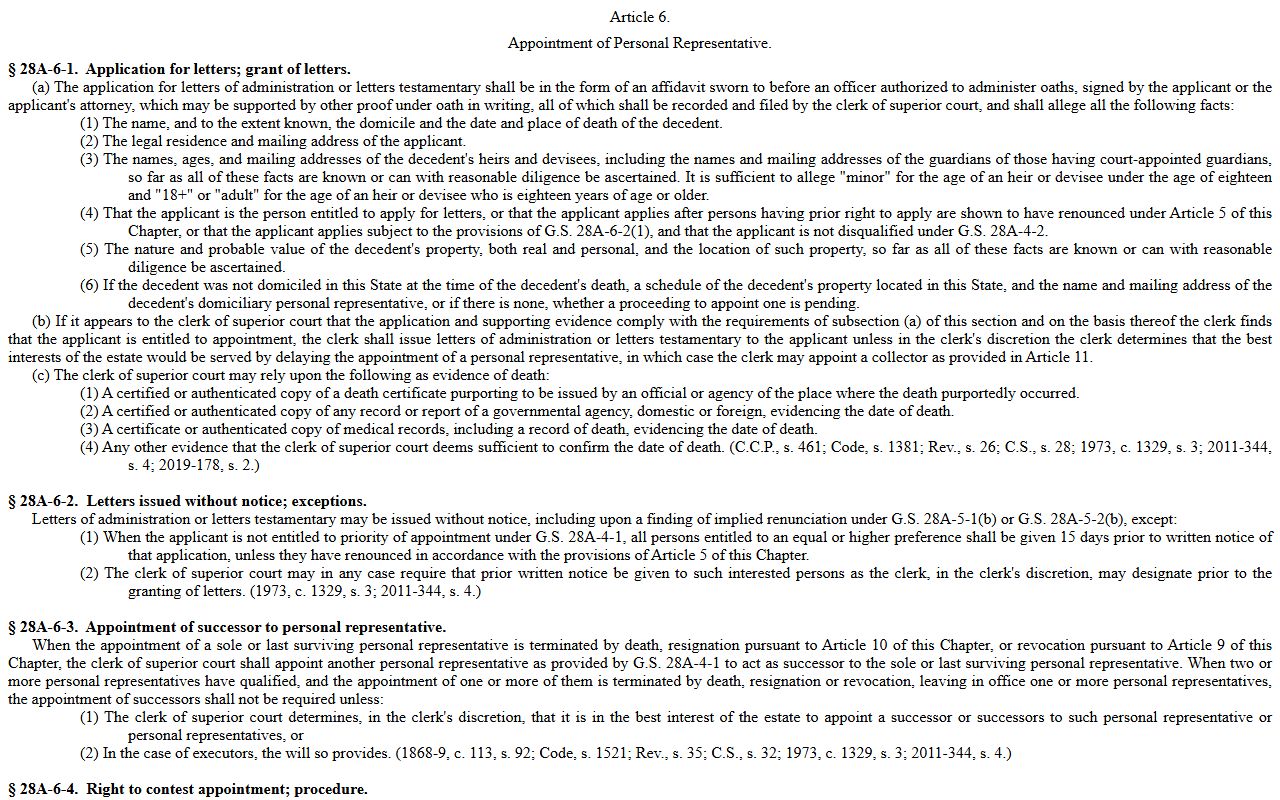
That statute source helps explain why letters and applications are core parts of a Duplin County probate record.
Duplin Estate Filing Process
Opening a full estate generally requires contacting or visiting the appropriate county clerk and bringing the will if any, a certified death certificate, an application, a preliminary inventory, and the filing fee. The clerk reviews whether the applicant has priority to serve. Priority can begin with the named executor, then move to the surviving spouse, beneficiaries, heirs, next of kin, creditors, and other qualified persons under the applicable rules.
The research identified several official estate forms that may appear in or support a Duplin County probate file. Examples include AOC-E-199 for probate without qualification, AOC-E-201 for probate and letters testamentary or administration CTA, AOC-E-202 for letters of administration, AOC-E-203B for collection of personal property by affidavit, AOC-E-204 for collection, disbursement, and distribution, AOC-E-505 for inventory, and summary administration forms AOC-E-905 and AOC-E-906. The exact form depends on whether there is a will, whether a personal representative is qualifying, and whether the estate can use a simplified process.
- Locate the will and death information.
- Contact or visit the Duplin County Clerk of Superior Court.
- Ask whether the estate may qualify for a simplified process, collection by affidavit, year allowance, summary administration, or full administration.
- File the application, will, death certificate or copy, oath, bond documents if needed, and fees.
- Receive letters when the clerk grants authority.
- Give notices, gather assets, pay valid claims and costs, file inventory and accountings, and close the estate when complete.
For record access, the form name can be a clue. An inventory or accounting usually points to estate administration after letters issue. A collection by affidavit may point to a smaller estate path. A probate-without-qualification filing can mean a will was admitted without a full personal representative appointment. If the online case summary only shows a title or event code, the clerk's file is the better source for the actual document.
Duplin Guardianship Records
Guardianship is related to probate because it is also handled through clerk and court processes, but it is not the same as ordinary estate administration. Guardianship may involve minors or adults who are found incompetent. Some records can be sensitive and access may depend on the type of case, party status, orders, and confidentiality rules. Search the Portal when a public summary exists, then use the clerk for file questions and access limits.
The N.C. guardianship help topic is the manifest source for guardianship context.
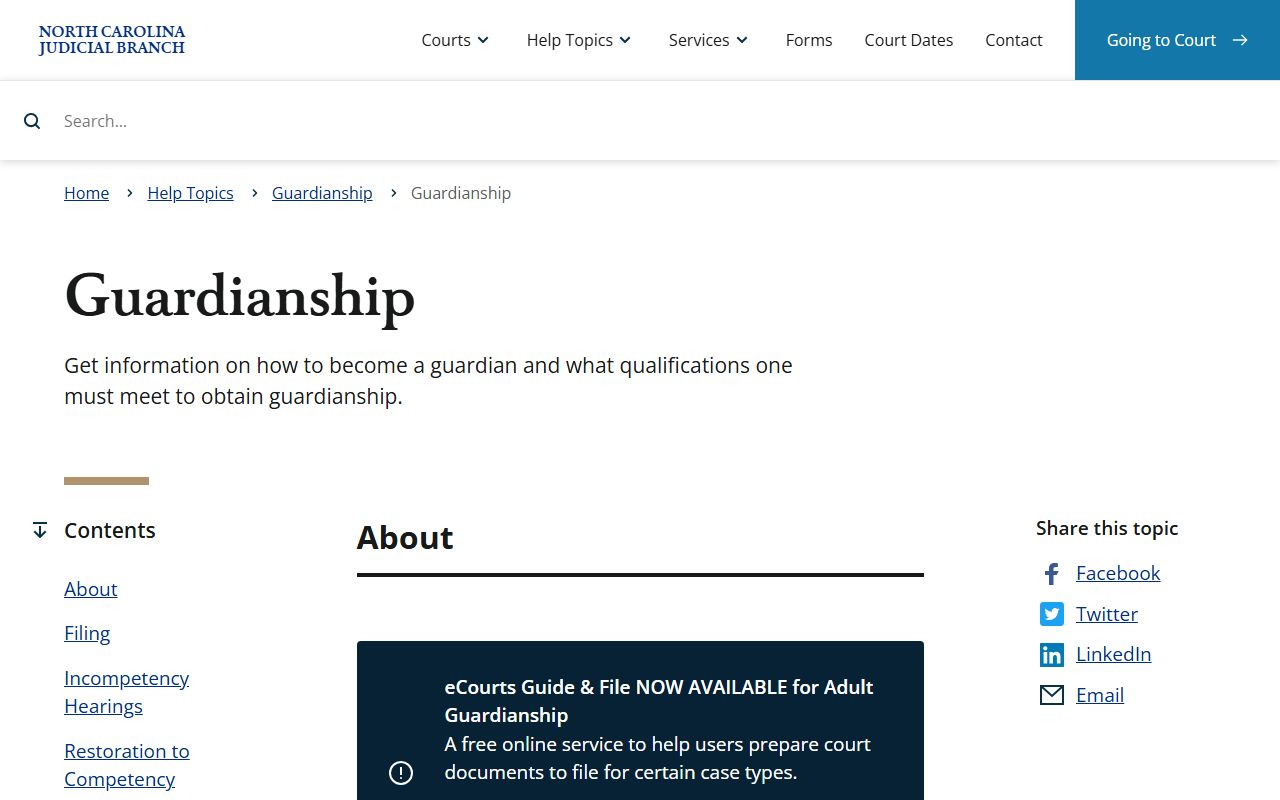
Guardianship records should be treated more carefully than routine estate indexes because they can involve capacity, minors, and protected personal information.
Restricted Duplin Probate Records
Once filed after death, a will becomes a public record and anyone may view or request a copy for a fee. That rule does not make every estate-related record fully public. Sealed filings, confidential personal identifiers, mental-health materials, certain guardianship details, juvenile-related records, and restricted financial information may be withheld or redacted. Older paper records may also require courthouse inspection rather than online access.
Search path: use Portal first for estate summaries, then contact the Duplin County Clerk of Superior Court for paper files, safekeeping wills, certified copies, and older records.