
Search Duplin County Court Records
Current Duplin County court records are searched through the North Carolina eCourts Portal. The portal is the public entry point for Smart Search, Search Hearings, Make Payments, and NC Judgment Search. It is useful for case summaries, party searches, hearing dates, payment searches, and judgment index details. The system requires JavaScript, cookies, and recurring CAPTCHA checks, so a blocked browser can make the clerk's public terminal a better choice.
Smart Search accepts a record number or a name in last, first format. Wildcard searching is allowed only when the search has enough characters. Portal training says public users can see a near real-time case summary or Register of Actions, which may include case information, assignments, parties, causes of action, events, hearings, dispositions, and financial information when those fields apply.
The official eCourts Portal landing page is the starting point for Duplin County court record searches.
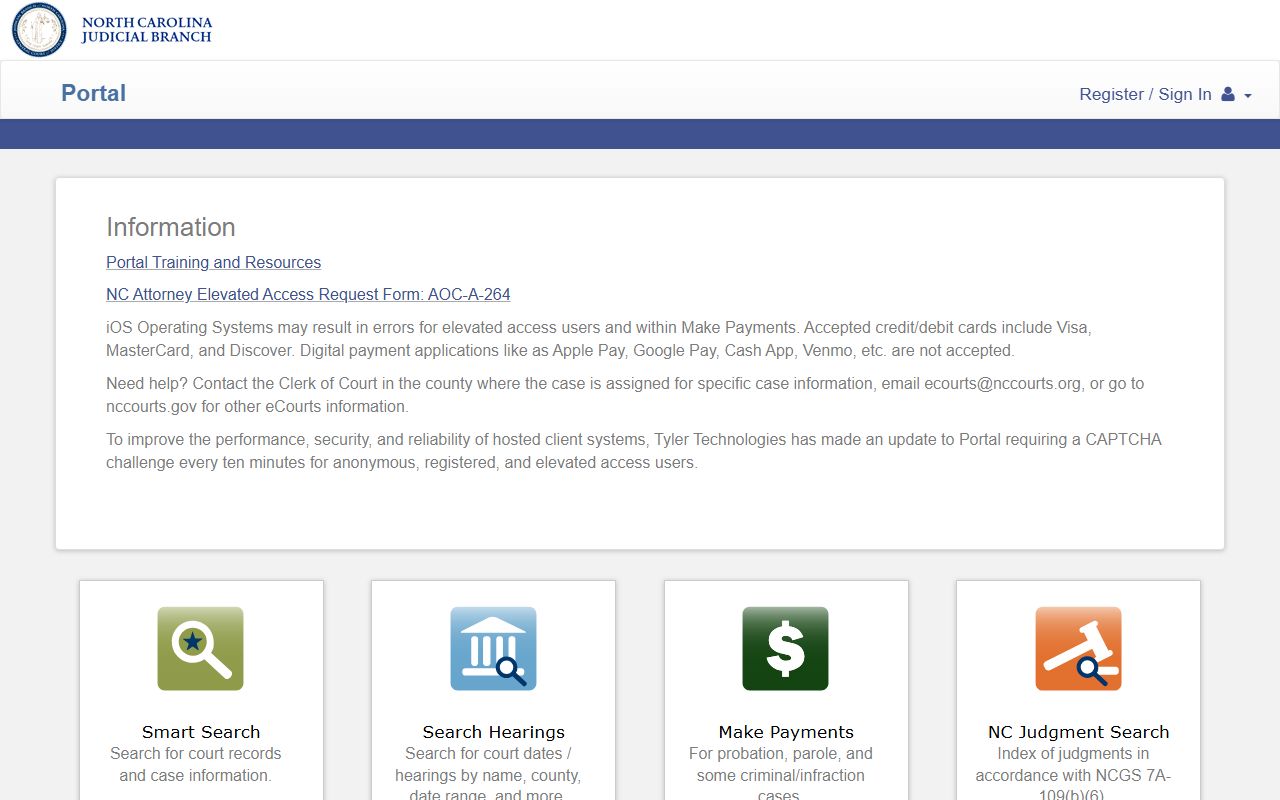
The portal separates case search, hearing search, payments, and judgments so a Duplin County user can choose the right court record tool.
- Open the eCourts Portal and choose Smart Search for case information.
- Enter a case number, business name, or person name in the required format.
- Use advanced filters for Duplin County, date ranges, case type, or party details when the first search is too broad.
- Review the case summary, events, hearings, dispositions, and financial fields that are visible to the public.
- Contact the Duplin County Clerk of Superior Court if a certified copy, paper file, older record, or official background check is needed.
| Smart Search field | How it helps |
|---|---|
| Record number or name | Search by case number or a party name in last, first middle suffix format. |
| Filter by location | Limits results to Duplin County instead of all eCourts counties. |
| File date range | Narrows civil, criminal, estate, and special proceeding results by filing date. |
| Case status and type | Separates open, closed, criminal, civil, family, estate, and other case categories. |
The Portal training page explains Smart Search fields, case summaries, saved cases, and elevated access.
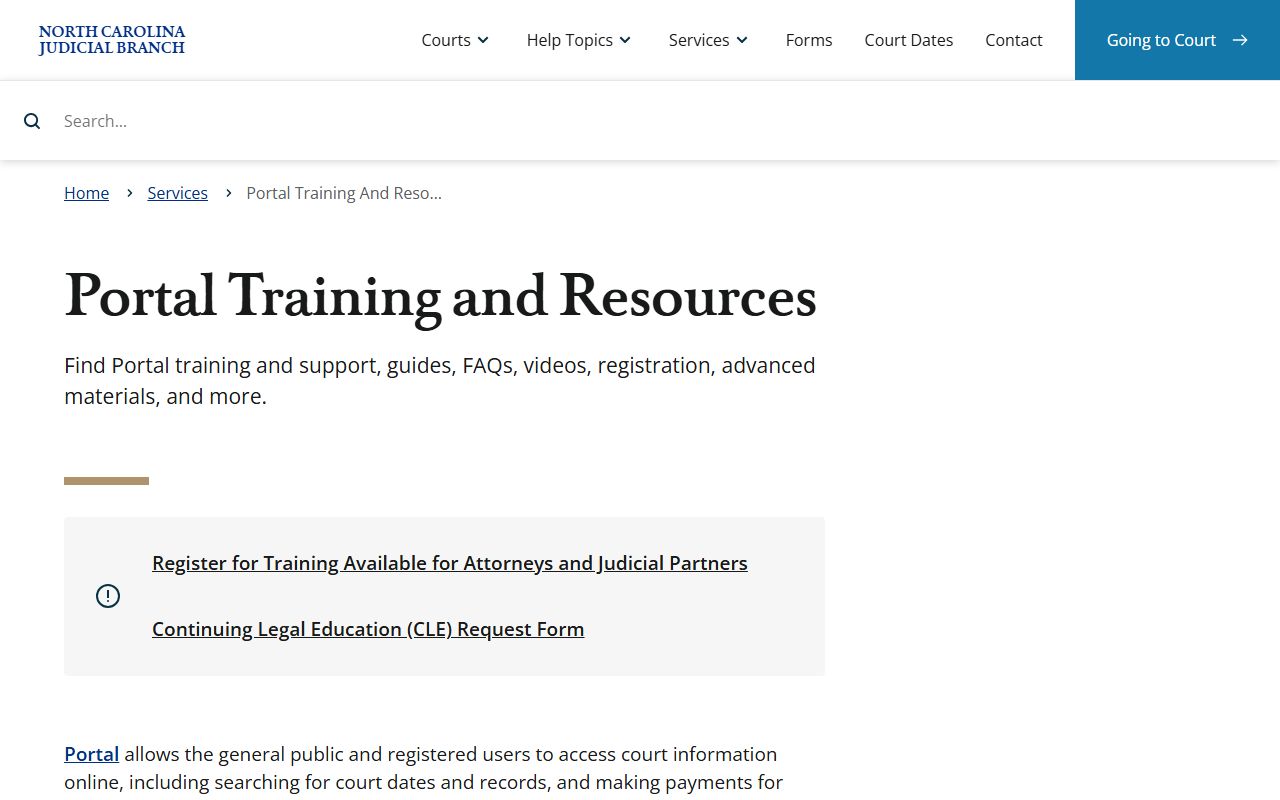
That training detail matters because Portal results are summaries, while certified copies and paper files still route through the clerk.
Duplin County Court System
Duplin County does not run a separate county court system. North Carolina uses the General Court of Justice, a unified statewide system with appellate courts, Superior Court, District Court, magistrates, and clerks. Duplin County is listed by the N.C. Judicial Branch in Prosecutorial District 5, Superior Court District 5, and District Court District 5.
Superior Court is the higher trial division for felony criminal cases, civil cases involving $25,000 or more, and appeals from District Court. District Court handles misdemeanors, infractions, traffic cases, domestic and family cases, juvenile matters, small claims, magistrate matters, and many civil cases below the Superior Court threshold.
Common case flow: Magistrate process › District Court hearing › Superior Court for felonies or appeals › North Carolina Court of Appeals.
| Court | Jurisdiction | Case Types |
|---|---|---|
| Superior Court District 5 | Higher trial division | Felonies, larger civil cases, appeals from District Court |
| District Court District 5 | Lower trial division | Misdemeanors, infractions, traffic, family, juvenile, small claims |
| Magistrate Court functions | District Court officer role | Small claims, initial criminal process, some warrant and bond matters |
The N.C. court structure page explains the statewide hierarchy, while the Duplin County Judicial Branch page links local calendars, forms, payments, and courthouse services.
The state court structure resource shows why Duplin County court records are state court records rather than county-created court files.
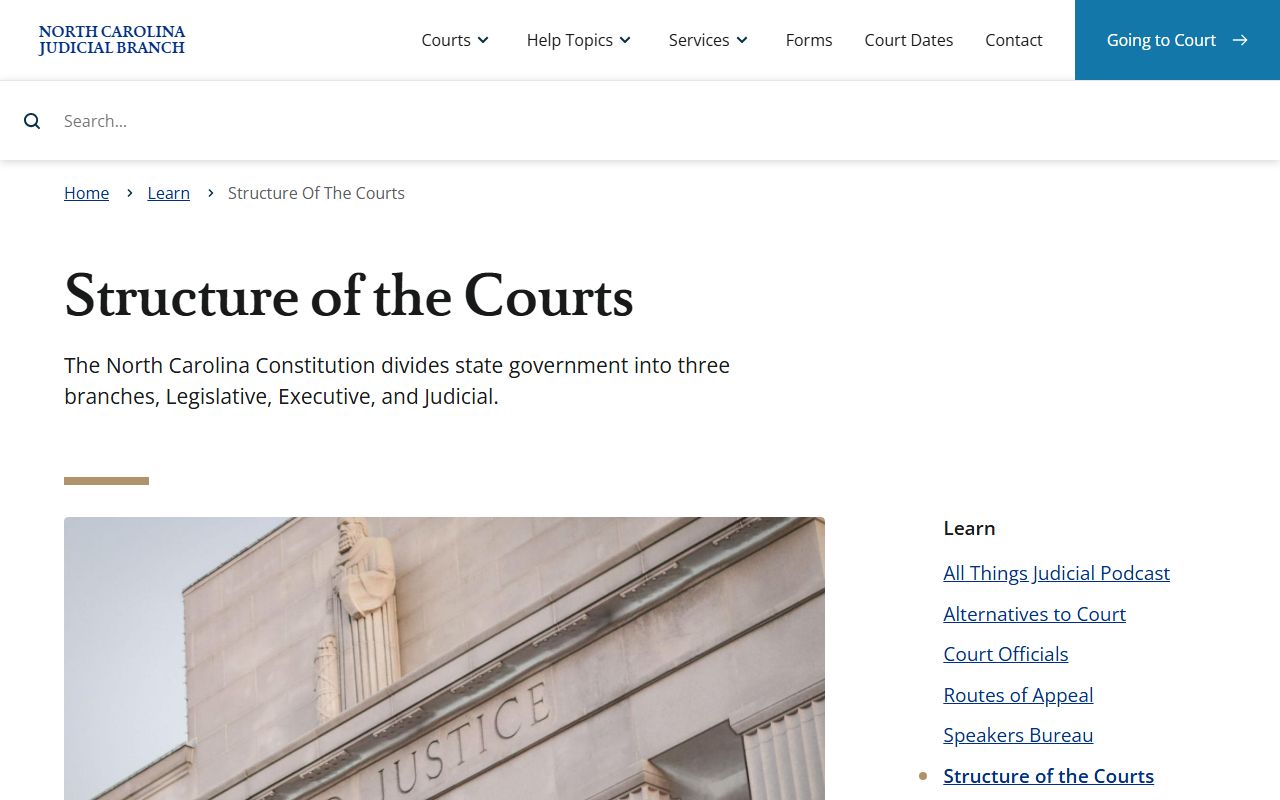
Superior Court, District Court, and magistrate matters all fit inside that statewide framework.
Duplin County Courthouse Contacts
The local court destination is the Duplin County Courthouse in Kenansville. It houses or routes users to Superior Court, District Court, the Clerk of Superior Court, magistrate services, court records, cashier payments, estates, and special proceedings. The official courthouse page lists the street address, mailing address, phone, and public hours.
The Register of Deeds is a separate county office. It handles marriage licenses, certified birth, death, and marriage certificates, real property, maps and plats, military records, and historical record searches. Divorce judgments and court files stay with the court system.
The official courthouse page confirms the Duplin County courthouse address, phone, hours, and map link.
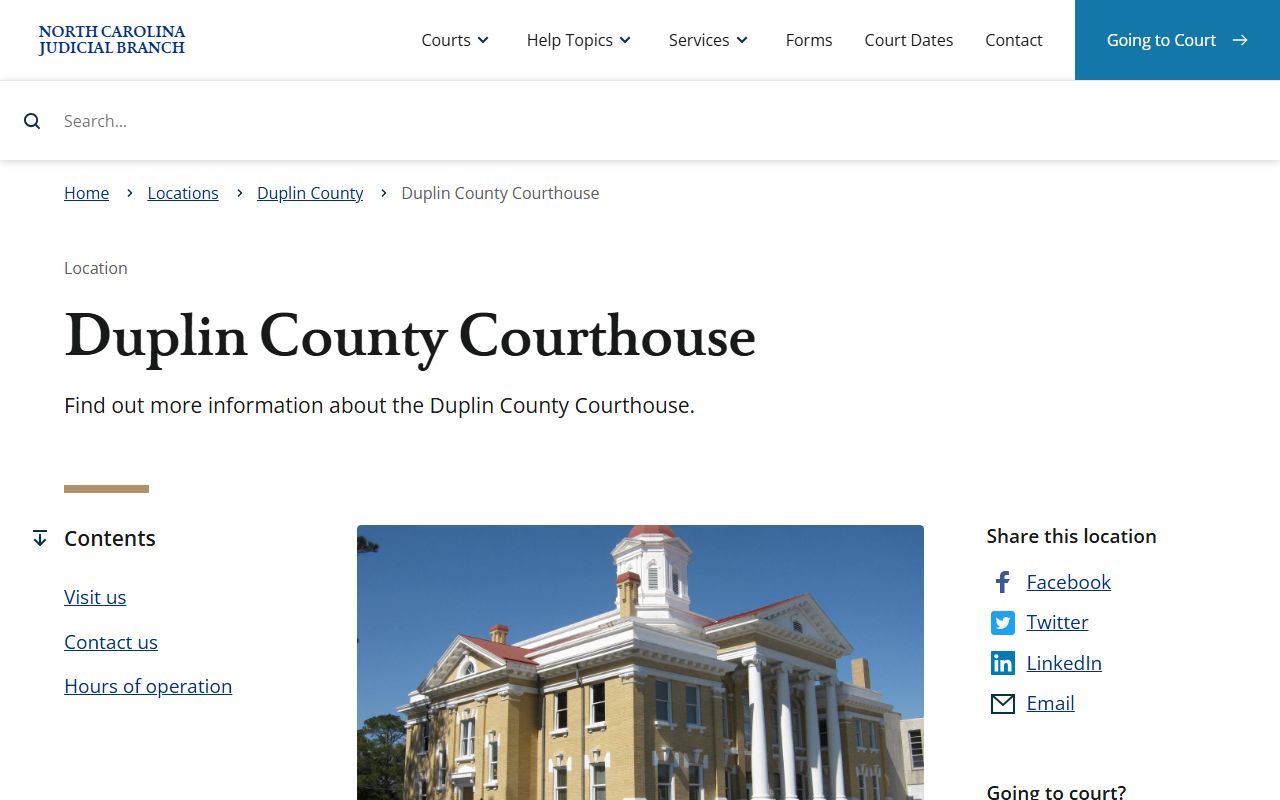
Use the courthouse page for court visits, and use the Register of Deeds page when the record is a license, certificate, deed, or historical index.
The Duplin County court contact directory lists the clerk, judges, district attorney, magistrates, and court program contacts.
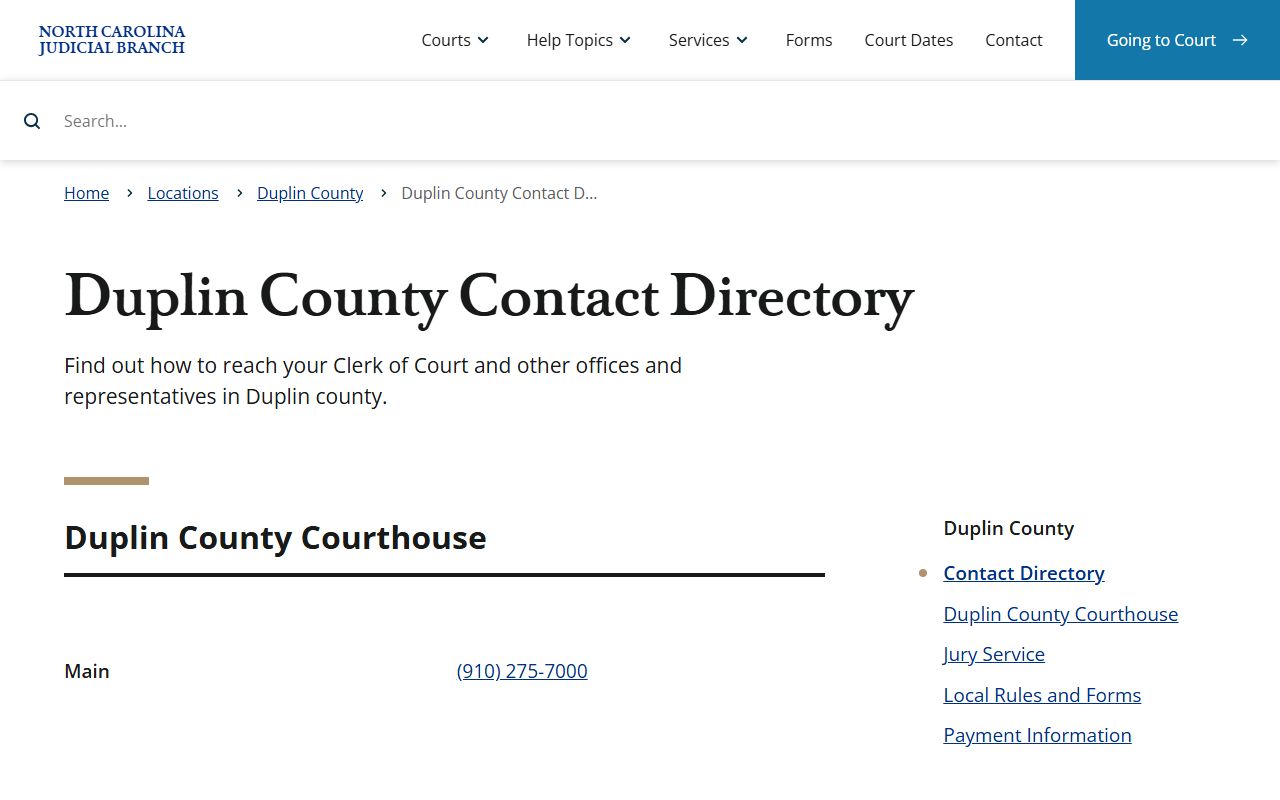
The directory helps route record questions to the clerk, court dates to the right court contact, and warrant process questions to magistrates when appropriate.
Duplin County Court Record Types
Duplin County court records include case files, hearing entries, orders, judgments, and financial records created by Superior Court, District Court, magistrate proceedings, and the Clerk of Superior Court. The eCourts Portal is best for current case summaries. Paper files, certified copies, estates, older matters, and criminal background checks may require the clerk's office.
The main point is source control. Court cases are in the N.C. eCourts system. Sheriff arrest and jail records are in Southern Software Citizen Connect. Marriage, real estate, vital records, and historical searches are in Register of Deeds systems.
- Criminal court records track charges, pleas, hearings, dispositions, sentences, restitution, and costs.
- Civil court records include complaints, answers, motions, orders, judgments, dismissals, and liens.
- Family and divorce records include divorce cases, custody, support, protective orders, and related filings.
- Estate and special proceeding records are handled before the Clerk of Superior Court, not a separate probate court.
- Traffic court records show citation status, court dates, waiver or payment status, disposition, and court costs.
What Duplin County Court Records Show
A Duplin County case summary can show the court location, case number, parties, attorneys, filing date, events, hearings, dispositions, and financial entries. The exact fields depend on the case type and public-access limits. A traffic citation will not look like an estate file. A felony case will not read like a small-claims judgment.
| Field | What It Shows |
|---|---|
| Case Number | Enterprise Justice/Odyssey number such as a year, case-type letters, sequence, and county identifier. |
| Filing Date | Date the complaint, citation, petition, estate, or criminal matter entered the court system. |
| Parties | Defendant, plaintiff, petitioner, respondent, estate, agency, attorney, or business names. |
| Charges or Claims | Criminal charge, infraction, cause of action, civil claim, estate matter, or special proceeding type. |
| Disposition | Outcome such as judgment, dismissal, plea, conviction, appeal, transfer, or other closing event. |
| Financial Entries | Costs, fines, restitution, attorney fees, probation or parole fees, and payment status when applicable. |
Case events and hearing records can also show continuances, motions, orders, courtroom settings, judicial officer names, and hearing types. Some fields are redacted by law. Juvenile, adoption, abuse, neglect, dependency, sealed, and expunged matters may not display as public records.
Duplin County Court Public Access
North Carolina law supports public access to many government and court records, but access is not unlimited. Court records are governed by clerk recordkeeping rules, public-record statutes, case-specific confidentiality laws, sealing orders, expunction statutes, and juvenile privacy rules. The practical route for Duplin County court records is Portal first, then the Clerk of Superior Court for paper files, certified copies, public terminals, older records, and official background checks.
Key Statutes:
N.C. Gen. Stat. 132-1 defines public records made or received in public business.
N.C. Gen. Stat. 7A-109 requires clerks to keep court records and open them to inspection unless law restricts access.
N.C. Gen. Stat. 132-1.4 limits access to criminal investigation and intelligence records.
N.C. Gen. Stat. 15A-153 explains the public-record effect of expunction.
Restricted Duplin County Court Records
Restricted records include juvenile delinquency, undisciplined juvenile matters, abuse, neglect, dependency, adoption-related records, sealed records, expunged records, some mental-health matters, confidential addresses, and protected personal identifiers. These limits can apply even when a case number exists or a hearing occurred in the courthouse.
If a Duplin County case is sealed, expunged, or confidential by statute, public portal access will not override that limit. A party, attorney, agency, or other person with a legal basis to inspect the file may need to work through the Clerk of Superior Court, a court order, or the specific statute that controls that record type. Law-enforcement investigation records follow a different path and may not be public under the same rules as court files.
Duplin County Specialty Context
The research file did not locate a Duplin-specific drug court, veterans court, or mental-health court page published as a separate local specialty court program. Duplin cases still move through statewide court divisions and local officials. Juvenile, domestic, small claims, estate, special proceeding, traffic, and criminal matters each have different procedures, forms, access limits, and court contacts.
For specialty-like record questions, the correct channel depends on the file. Juvenile records are restricted by Chapter 7B. Estates and guardianships are clerk matters. Small claims are magistrate matters in District Court. Criminal prosecution involves the District Attorney for Prosecutorial District 5, while eligible indigent defendants may be represented through Defender District 5.
Duplin County Sheriff and Jail
The Duplin County Sheriff's Office is separate from the court clerk. Sheriff Stratton F. Stokes is named on the county sheriff biography page. The official sheriff address is 112 West Hill Street, PO Box 908, Kenansville, NC 28349. The sheriff main number is (910) 296-2150, the Detention Center number is (910) 296-2324, and the after-hours number is (910) 296-1911.
The sheriff's public safety records use Citizen Connect. It includes inmate confinements, arrest search, most wanted, incident search, daily reports, tip submission, and related sheriff channels. It is not the court record portal. Court charges, hearings, and final dispositions are checked in eCourts or with the Clerk of Superior Court after a case opens. The full custody workflow is covered in Duplin County inmate records, and warrant channels are covered in Duplin County warrant records.
Marriage, Divorce, and Estates
Marriage licenses and certified birth, death, and marriage certificates are handled by the Duplin County Register of Deeds, not the Clerk of Superior Court. Anita Marie Savage is listed as Register of Deeds. The ROD website provides online search routes for marriage records, marriage bonds, real property, vital records, cohabitation records, enslaved records, and land grant maps.
Divorce case files and judgments are court records. They can be searched through eCourts or requested through the Clerk of Superior Court. Estates and special proceedings before the Clerk of Superior Court are Duplin County's probate-style record path. Detailed record access appears in the marriage and divorce records and estate records sections.
- Testator
- A person who made a will before death.
- Executor
- The person named in a will to manage estate administration.
- Personal representative
- The executor or administrator authorized by the clerk to act for an estate.
Duplin County Court Fees
Duplin County court costs and record-related payments follow statewide N.C. Judicial Branch fee schedules and local payment instructions. The Duplin County payment page states that in-person payments are made at the Cashier's Office in the courthouse. Mail payments must be money order or certified check, payable to Duplin County Clerk of Superior Court. Cash and personal checks are not accepted by mail.
The official Duplin payment instructions describe local in-person and mail payment rules.
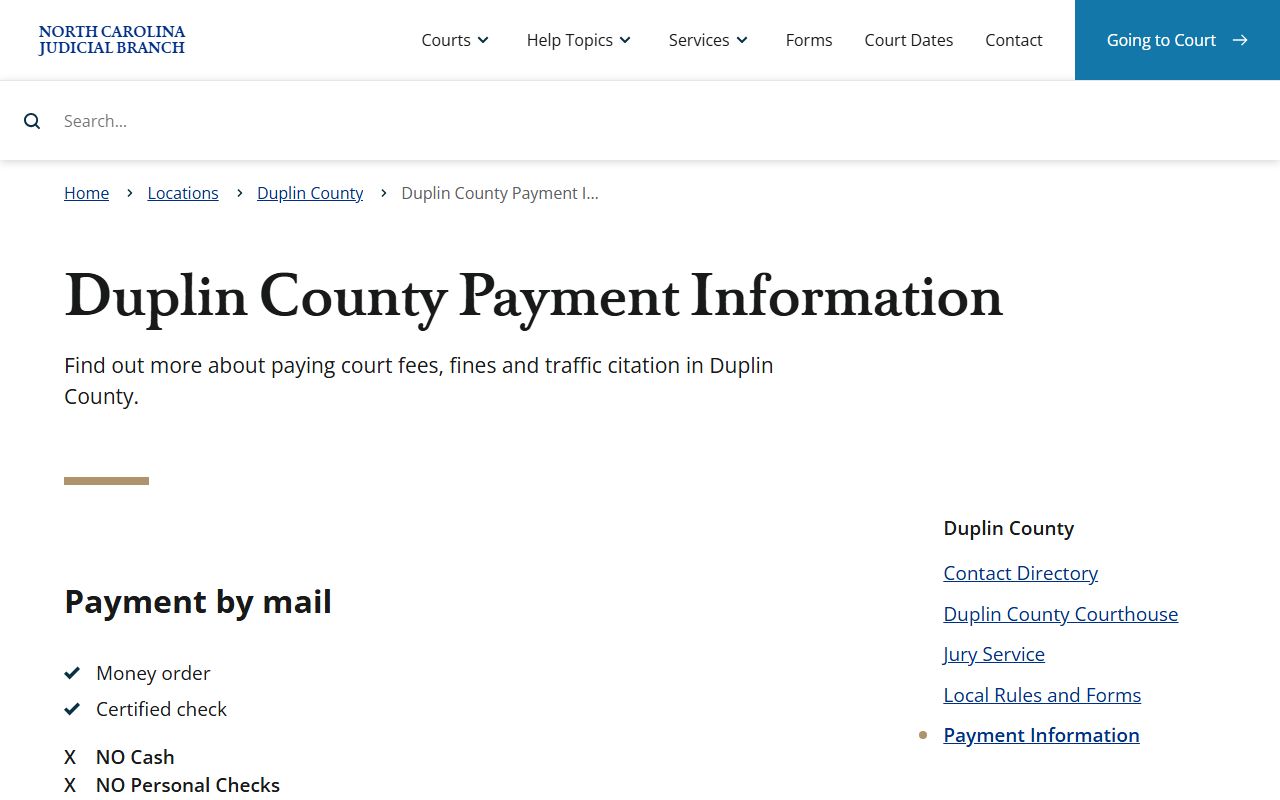
Payment rules are local enough that a person should check the Duplin County page before mailing a citation or court-cost payment.
| Item | Amount |
|---|---|
| Marriage license through Register of Deeds | $60 |
| Certified copy of marriage license | $10 |
| New estate administration total | $120 plus gross estate fee when applicable |
| Probate of will without qualification | $30 |
| District court absolute divorce filing total | $150 plus $75 absolute divorce add-on before service or name-change extras |
| Sheriff civil process service | $30 |
The Current Court Costs page links the active civil, criminal, estates, special proceedings, and miscellaneous schedules. Copy fees were not located in a Duplin-specific official source during research, so the clerk should confirm copy and certification charges before a visit.
Interpret Duplin County Court Records
A charge is not the same as a conviction. A charge is an allegation or count filed in a criminal case. A conviction is a final guilt finding or plea. A disposition is the outcome of a charge, claim, or case. A docket is the chronological list of court events, while a judgment is the court's final or enforceable decision.
Portal case summaries should be read with care. A pending event may not show the final outcome. A payment balance may not prove all legal duties are complete. A dismissed charge may still appear in a public history unless expunged. Certified copies, criminal background checks, and paper file review still depend on the Clerk of Superior Court.
Duplin County Record Limits
Duplin County moved into the eCourts Track 7 group when eCourts went live for Duplin and other coastal counties on February 3, 2025. The launch brought eFiling, Portal, and Enterprise Justice/Odyssey to local court records. Online access is useful, but case updates can still depend on clerk processing, courtroom events, payment posting, and data restrictions.
The wrong portal is a common error. Court records are not in the sheriff's arrest search. Jail records are not in Smart Search. Marriage licenses are not issued by the Clerk of Superior Court. Real property and historical marriage bonds route through the Register of Deeds.
Note: Confirm certified copies, court dates, and payment status with the originating office before relying on an online result.
Duplin County Court History
The county's official history says Duplin County was created in 1750 from northern New Hanover County. The first official county court was held in 1751 in the home of William McRee in the Goshen settlement area. After Sampson County was created in 1784, the courthouse moved to a more central location that became Kenansville.
The Register of Deeds office traces its role to the organization of county government in 1750. Its historical searches now include marriage bonds, certifications, cohabitation records, enslaved records, land grant maps, real property, and vital records. That history explains why some older legal records are outside the modern court portal.
The Historic Duplin page and county chronology provide local background for early court sessions, courthouse moves, and the growth of county recordkeeping.
The Duplin County local rules and forms page is another official court resource tied to local practice.
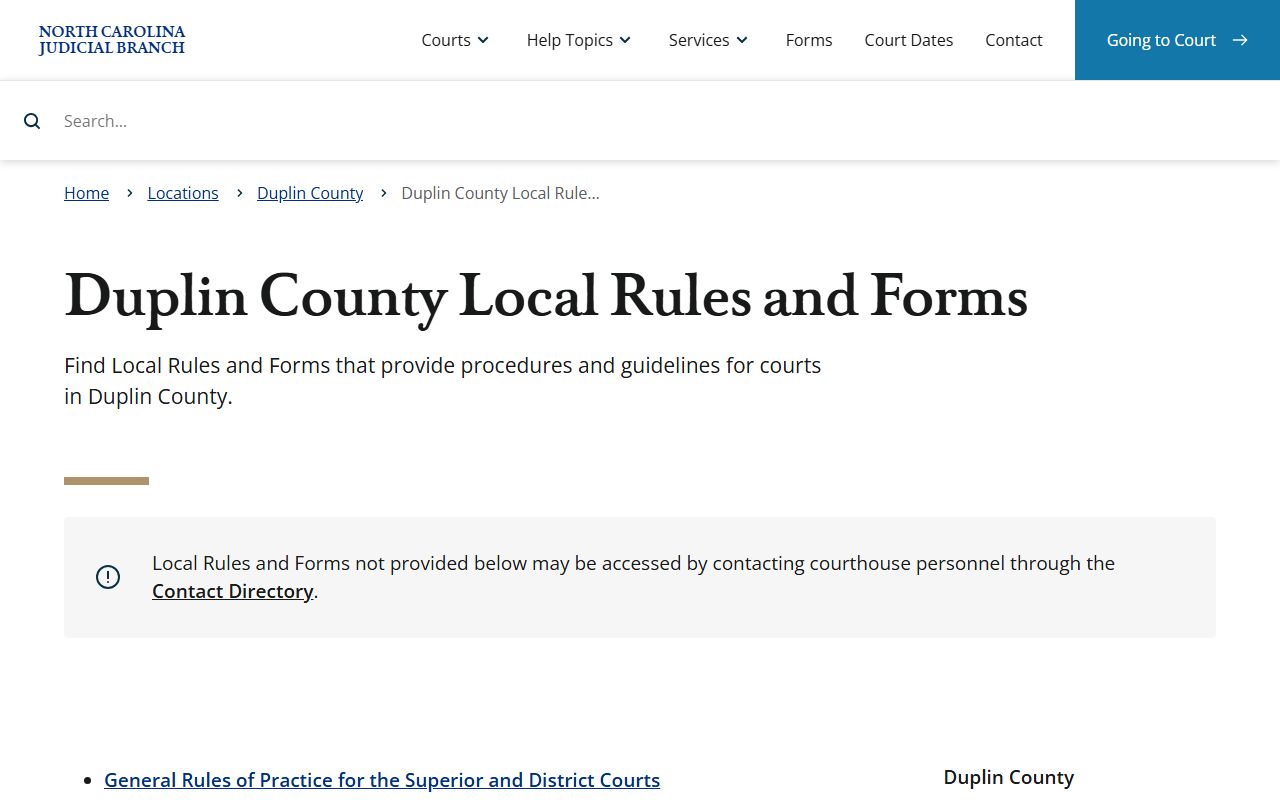
Local rules and forms can affect filings even when the case search itself is statewide.
The N.C. Judicial Branch Duplin County page collects court services, calendars, forms, payments, and county court news.
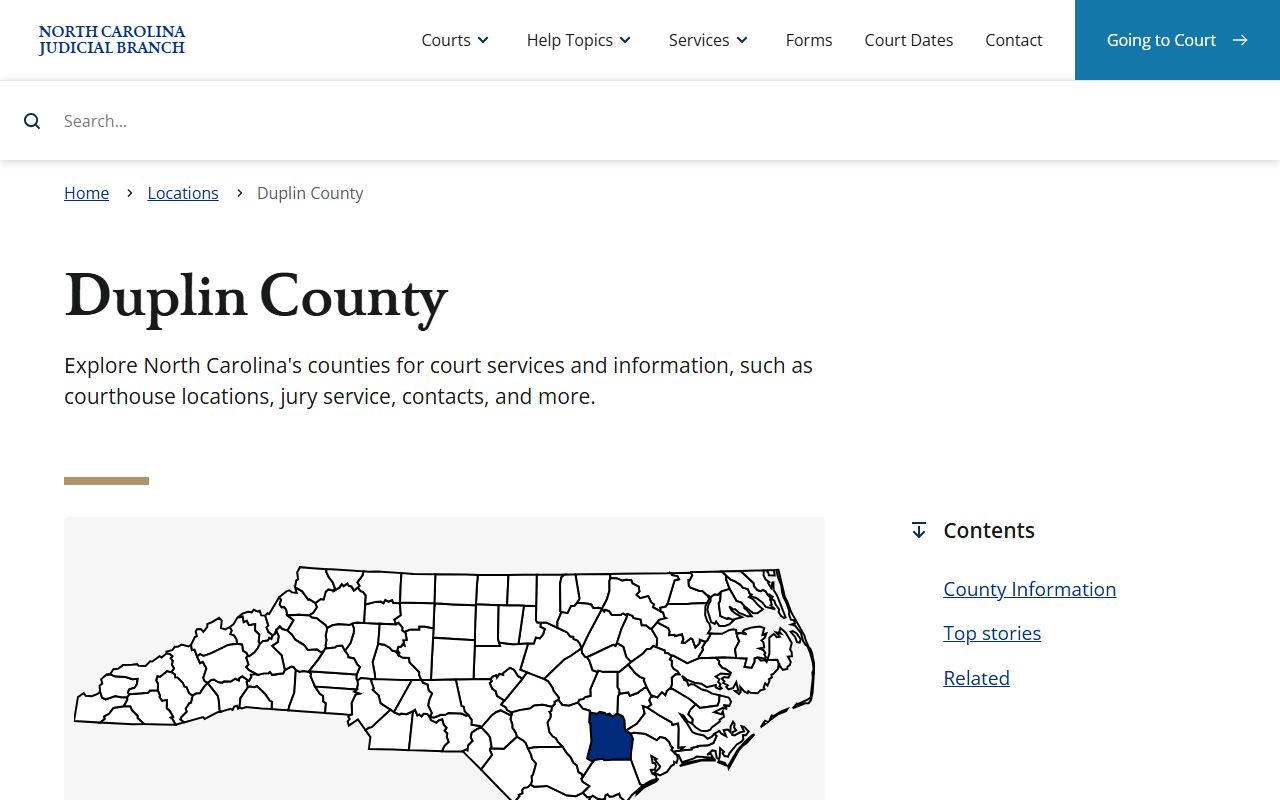
That landing page is useful when a user needs both a court record search and a local court service link.
The official Duplin County homepage points to county services outside the court system.
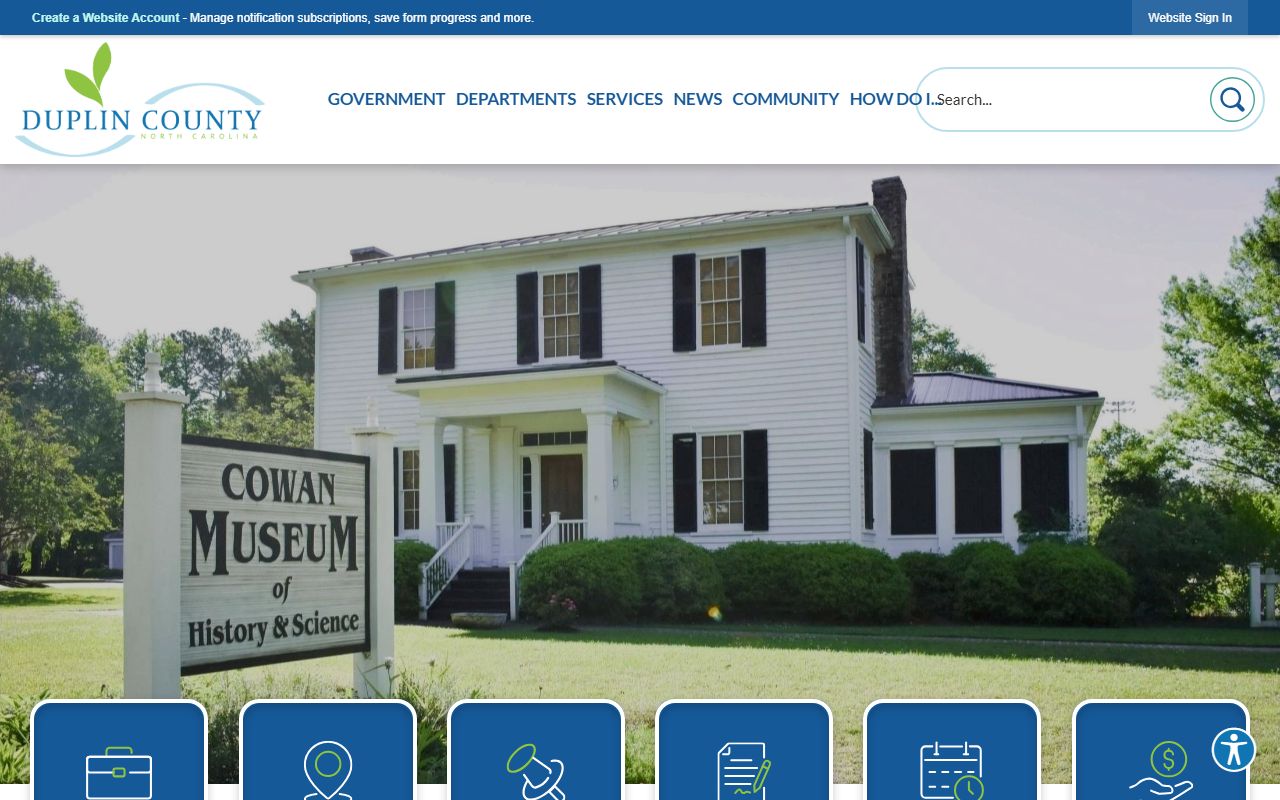
County services matter because sheriff, Register of Deeds, GIS, tax, and public safety records are not maintained by the court clerk.
The Historic Duplin resource gives local context for early courts and county recordkeeping.
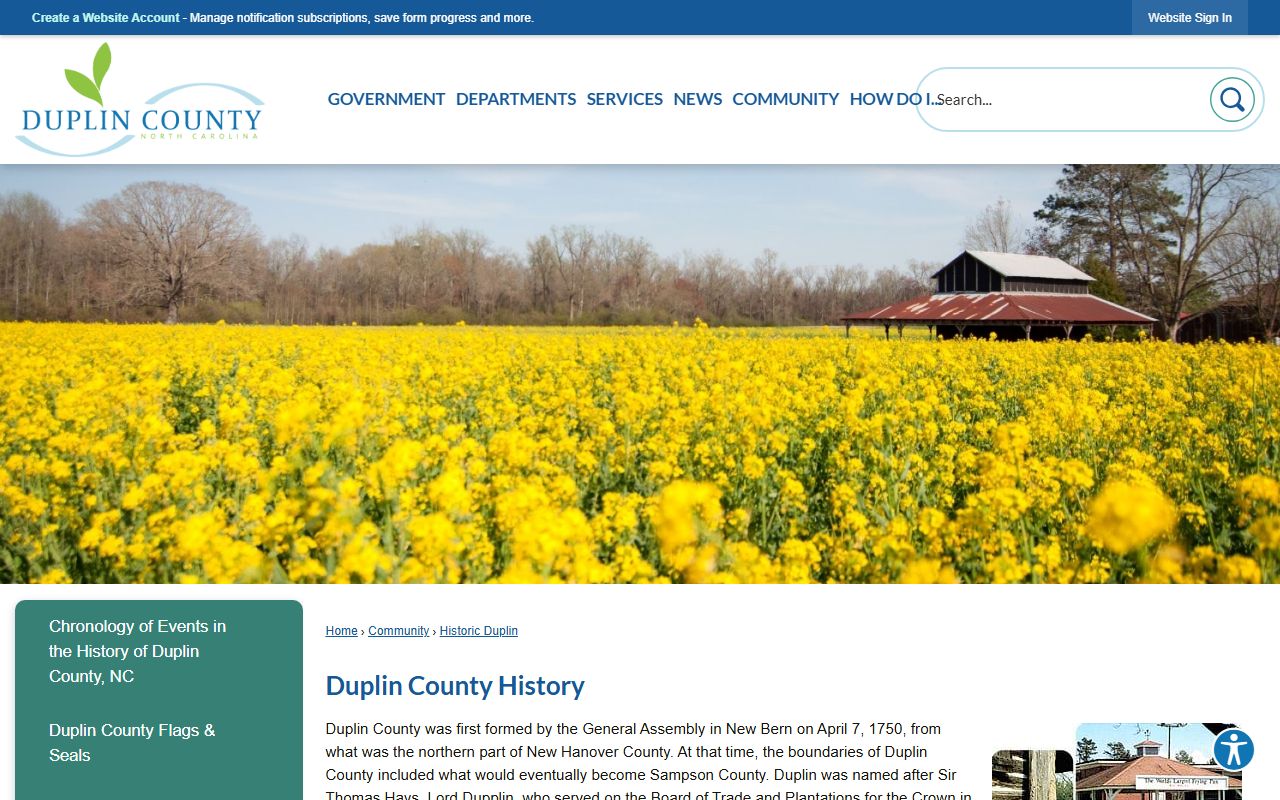
Historical court and Register of Deeds material helps explain why older marriage, land, and local-government records may sit outside eCourts.
Frequently Asked Questions
Where do Duplin County court records start?
Most current case searches start in the N.C. eCourts Portal. Use Smart Search for case summaries, Search Hearings for court dates, Make Payments for eligible payments, and NC Judgment Search for judgment index entries. The clerk's office remains the fallback for paper files, certified copies, older cases, and official background checks.
Is the sheriff arrest search the same as court records?
No. Citizen Connect is the sheriff channel for arrest search, inmate confinements, most wanted, incident search, and tips. Court charges, hearings, dispositions, and sentences are court records. A recent arrest can lead to a court case, but the systems are separate.
Who handles Duplin County marriage records?
The Register of Deeds handles marriage licenses, certified marriage copies, and marriage record searches. Divorce case files and divorce judgments are court records through the Clerk of Superior Court and eCourts. Divorce certificates may also involve N.C. Vital Records.
Does Duplin County have a probate court?
No separate probate court was identified. North Carolina estate administration is handled as estates and special proceedings before the Clerk of Superior Court. Estate case summaries may appear in Smart Search, while wills, certified copies, and older paper files may require the clerk's office.
Can every court record be viewed online?
No. Online public access excludes or limits sealed, expunged, juvenile, adoption, abuse, neglect, dependency, mental-health, and other confidential records. Some paper files, certified copies, and older records must be handled through the Duplin County Clerk of Superior Court.