
Duplin County Criminal Court Records
A criminal court record in Duplin County begins when a criminal matter is filed in the North Carolina General Court of Justice. The local court file is maintained through the Duplin County Courthouse and the Clerk of Superior Court. It is the court record for the prosecution, not the sheriff booking entry. It can include the case number, defendant name, charge description, statute, hearing history, plea, disposition, sentence, restitution, costs, bond entries, and probation information when those items apply.
North Carolina uses one statewide court system. In Duplin County, felony cases route to Superior Court District 5, while misdemeanors and infractions generally route through District Court District 5. Magistrates may be involved at the start of a criminal process, and the District Attorney handles state prosecution. The Prosecutorial District 5 page identifies Duplin, Jones, Onslow, and Sampson as the district served by District Attorney Ernie Lee. For custody status after an arrest, use the jail and sheriff tools instead of treating the court file as a live roster.
The official Prosecutorial District 5 page shows how Duplin County criminal cases fit into the regional prosecution structure.
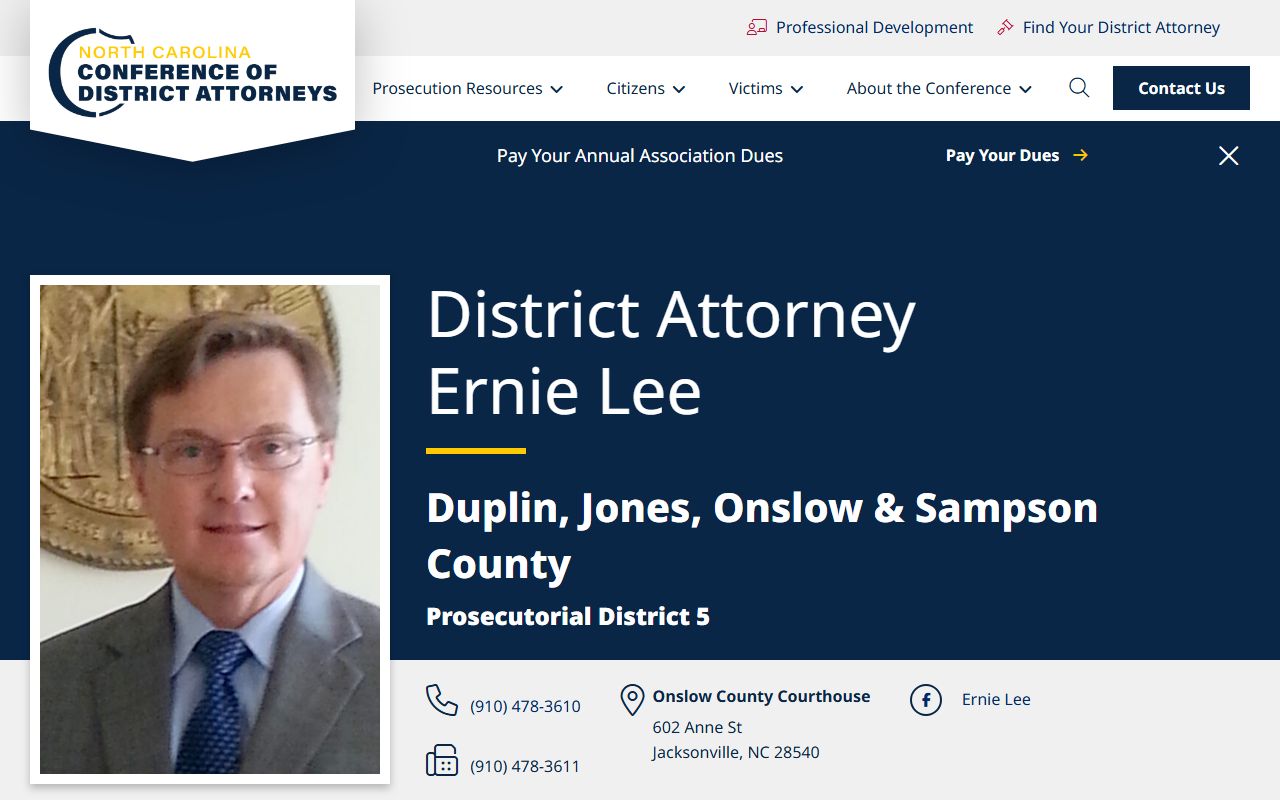
That district role matters because charges filed in Duplin County are prosecuted by the State, while the Clerk of Superior Court keeps the case record for public lookup and copy requests.
Search Duplin County Criminal Records
The main online starting point is the North Carolina eCourts Portal. Smart Search can return a near real-time case summary or Register of Actions for public case information. Search Hearings is better when the immediate need is a court date, hearing type, courtroom, party name, attorney name, judicial officer, or case number. If a criminal court record is older, paper-based, certified, sealed, or not clear online, the Clerk of Superior Court at 112 Duplin Street in Kenansville is the official fallback.
- Open the eCourts Portal and choose Smart Search for case information, or Search Hearings for a court-date lookup.
- Search by defendant name or case number. Portal training gives the criminal case number format as year, case-type letters, sequence number, and county identifier.
- Use advanced filters such as location, case type, filing date, party fields, date of birth, or case status when the name is common.
- Open the case summary and review the case events, hearings, dispositions, financial entries, and charge information.
- Contact the Clerk of Superior Court for paper file inspection, certified copies, older records, or a county criminal background check.
Criminal background checks have a separate official channel. The N.C. Judicial Branch advises people seeking county criminal background checks to use the county clerk's office rather than relying on Portal results alone. Public terminals in any county clerk's office can be used for criminal case information by defendant name, case number, or victim and witness name, but paper files must be viewed at the clerk's office where the case is located.
The official North Carolina defender directory is also relevant for pending Duplin County criminal cases involving appointed counsel.
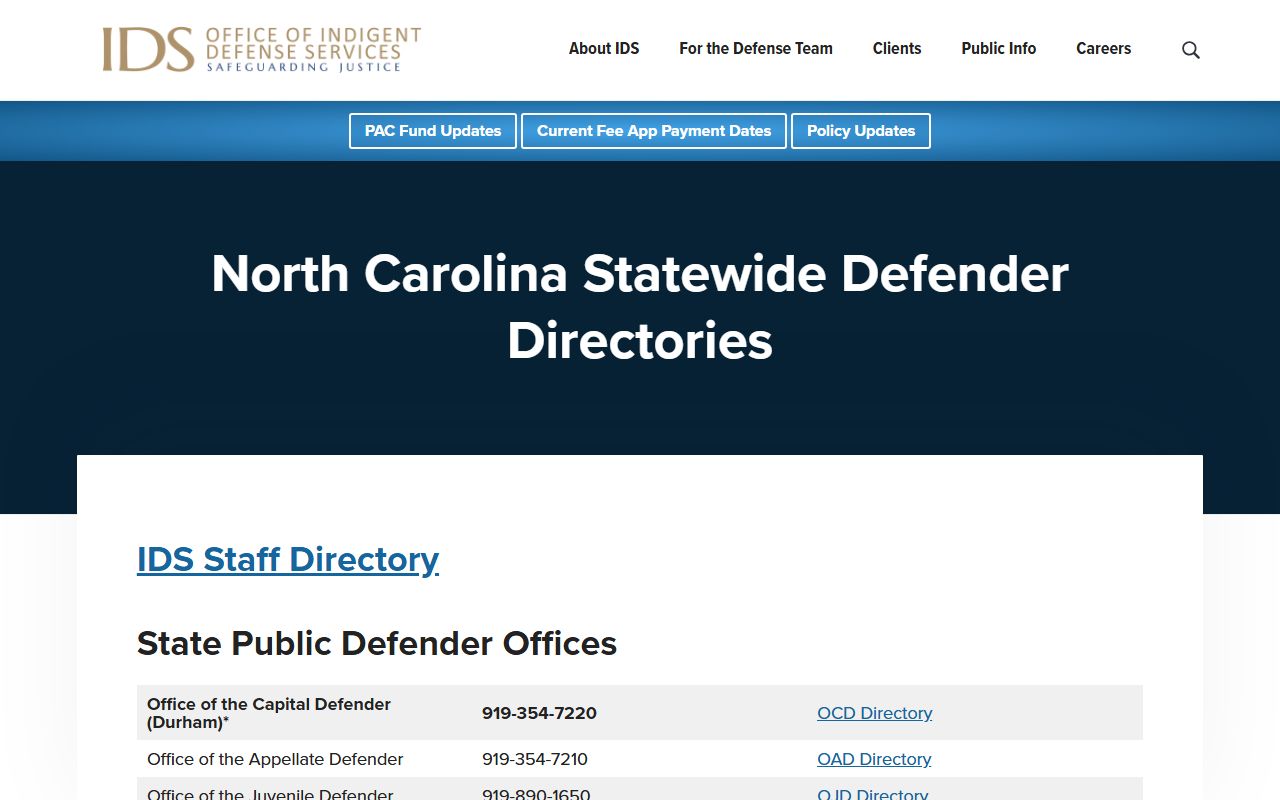
Defender District 5 covers Duplin County, and court-appointed counsel may be the best access channel for discovery, bond questions, and hearing preparation in an active case.
Duplin County Criminal Case Flow
A Duplin County felony may start with an arrest, warrant, first appearance, or magistrate process, then move through district-court preliminary stages before indictment and Superior Court prosecution. A misdemeanor usually stays in District Court unless an appeal or transfer changes the path. Each step can create a docket entry or hearing entry. The case file is therefore a timeline, not just a final result.
Case flow: Charges Filed › Arraignment › Pretrial / Motions › Plea or Trial › Disposition › Sentencing
| Stage | What Happens |
|---|---|
| Charges Filed | The accusation enters the court system through a citation, warrant, magistrate order, indictment, information, or other charging paper. |
| Arraignment | The court addresses the charge and plea posture. The file may show a plea, counsel status, next setting, or waiver. |
| Pretrial / Motions | The record may list bond reviews, continuances, discovery issues, suppression motions, competency issues, or other requests to the court. |
| Plea or Trial | The case may end by plea, dismissal, trial verdict, or other disposition. The docket should be read charge by charge. |
| Sentencing | If there is a conviction, the record may show confinement, probation, restitution, court costs, fines, and other conditions. |
The official IDS Duplin County page places the defender context at the county courthouse level.
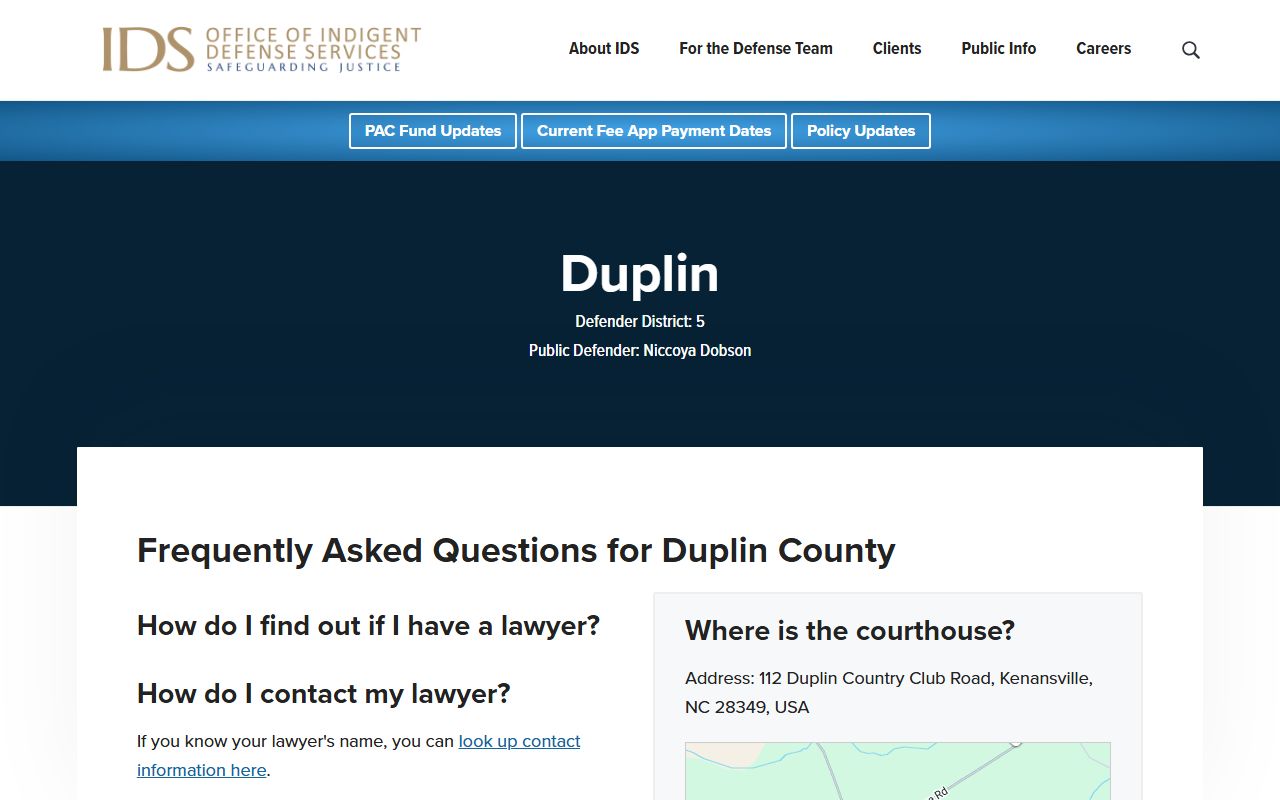
That local defense channel is part of the criminal case process because many active records are best understood with counsel, especially before disposition.
Duplin County Criminal Record Fields
Portal training says a public case summary may include case summary, case information, assignment information, party information, case events, dispositions, hearings, and financial information when applicable. For a criminal matter, those fields must be read with care. A single arrest can produce more than one charge, and each charge can have its own outcome. A dismissed charge, a reduced charge, and a conviction are not the same thing.
| Field | What It Shows |
|---|---|
| Case Number | The Odyssey case identifier, such as a year, case-type letters, six-digit sequence, and county identifier. |
| Defendant | The person charged in the criminal case, with public party information subject to redaction rules. |
| Court / Location | Duplin County, Superior Court District 5, District Court District 5, or related hearing location data. |
| Charges | The charged offense, statute or code, offense date, charge level, and related process information where available. |
| Hearings | Court dates, hearing types, courtroom or judicial officer entries when Search Hearings or Smart Search displays them. |
| Plea | The defendant's formal answer to a charge, such as guilty, not guilty, or another plea entry if public. |
| Disposition | The outcome of a charge or case, such as guilty, dismissed, not guilty, or another court result. |
| Sentence | Confinement, probation, restitution, fines, costs, attorney fees, or other ordered conditions when there is a conviction. |
Duplin Charges vs Convictions
Charges are accusations. Convictions are outcomes after a guilty plea, finding, or verdict. A Duplin County criminal court record may show both because the court keeps the case history, not just the final line. The distinction is critical for anyone reading a criminal case file, checking a dismissed case, or comparing court data with an arrest record. For the narrower arrest-to-charge path, see Duplin County arrest records and court charges.
| Point | Charge | Conviction |
|---|---|---|
| Meaning | An allegation filed through court process. | A finding or plea that results in guilt. |
| Record Stage | Early case stage, sometimes before full review. | Final or near-final outcome for a charge. |
| Proof Level | Based on probable cause or charging authority. | Based on plea or proof beyond a reasonable doubt. |
| Public Effect | May appear even if later dismissed. | May affect sentence, costs, probation, and background records. |
Read Duplin Criminal Dispositions
A disposition is the outcome of a charge, claim, or case. In criminal records, common outcomes include guilty, not guilty, dismissed, or other court results. North Carolina records may also show events, continuances, financial entries, probation references, or sentencing conditions. The important point is to read the disposition for each charge, not just the case header. One case can contain multiple counts with different results.
Financial fields can include court costs, fines, restitution, criminal attorney fees, probation or parole fees, and balances where applicable. The Duplin County payment page says eligible in-person payments are made at the courthouse cashier, while eligible mail payments must be money order or certified check payable to the Duplin County Clerk of Superior Court. A payment record is not the same as a sentence, but it may show whether costs or restitution remain due.
Duplin Sealed and Expunged Records
Restricted criminal records are not all restricted for the same reason. A sealed record may still exist in the court system but be hidden from ordinary public access by law or court order. An expunged record is treated differently under North Carolina expunction law. The Judicial Branch expunction topic and Chapter 15A statutes should be used for eligibility and forms because Duplin-specific expunction clinic rules were not found in the research.
| Point | Sealed | Expunged |
|---|---|---|
| Public View | Hidden or restricted from general public inspection. | Cleared from ordinary public-record checks after an order. |
| Record Existence | The record may remain in court systems with limited access. | Public entries are removed or treated as cleared under the expunction order. |
| Authority | Usually statute, rule, or judge's order. | Article 5 of Chapter 15A and a granted expunction petition. |
| Duplin Path | Ask the Clerk of Superior Court about access limits. | File through the county where the charge was handled if eligible. |
The expunction effect statute, N.C. Gen. Stat. 15A-153, explains why expunged entries should not appear in ordinary public checks.
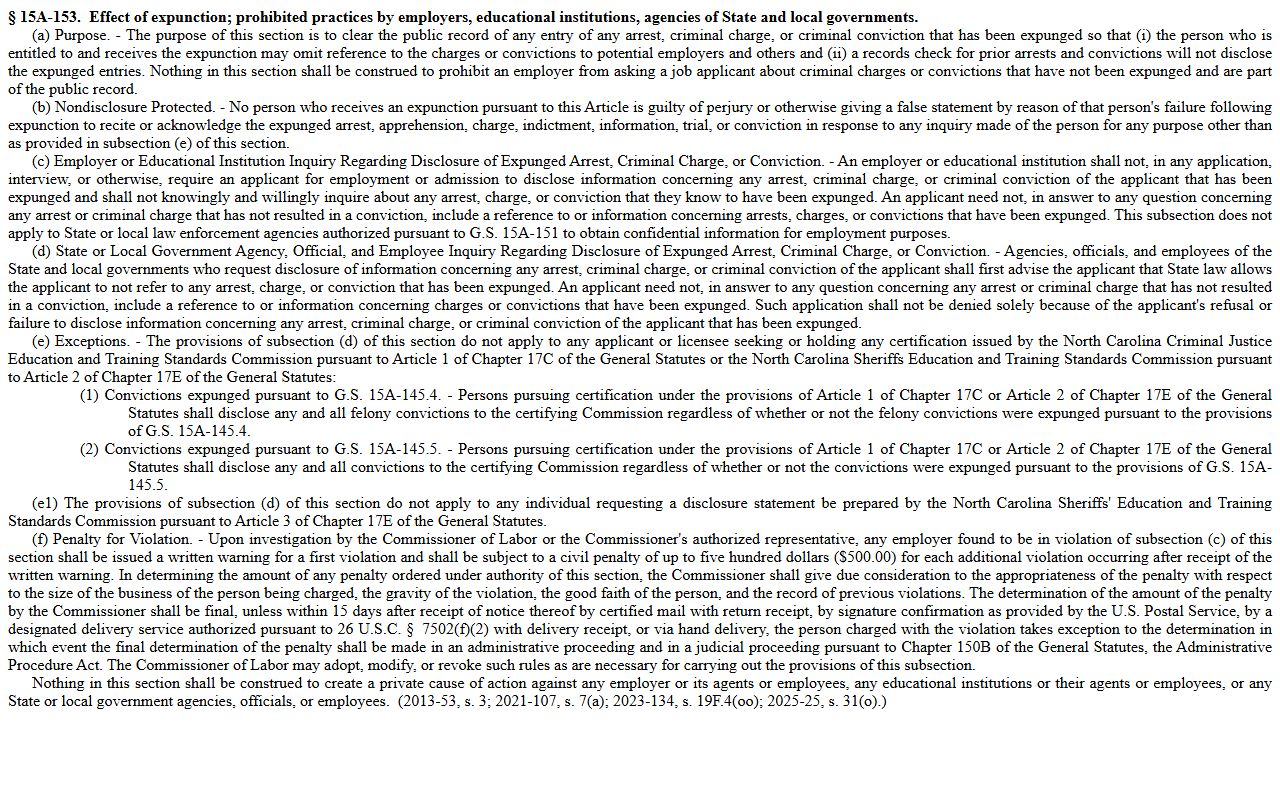
That statute is separate from a dismissal. A dismissed Duplin County charge may still need expunction before it is cleared from public-facing checks.
Duplin Criminal Record Access Laws
Public access to Duplin County criminal court records rests on court-record and public-record rules, but those rules have limits. N.C. Gen. Stat. 132-1 broadly defines public records. N.C. Gen. Stat. 7A-109 requires clerks to keep court records, files, dockets, and indexes open to public inspection during regular office hours unless law says otherwise. The court side should be kept separate from law-enforcement investigative records, which are limited by N.C. Gen. Stat. 132-1.4.
Key access point: Portal is useful for public case summaries, but certified criminal copies and county background checks route through the Clerk of Superior Court.
Expunction eligibility for certain nonviolent misdemeanors and felonies is addressed in N.C. Gen. Stat. 15A-145.5.
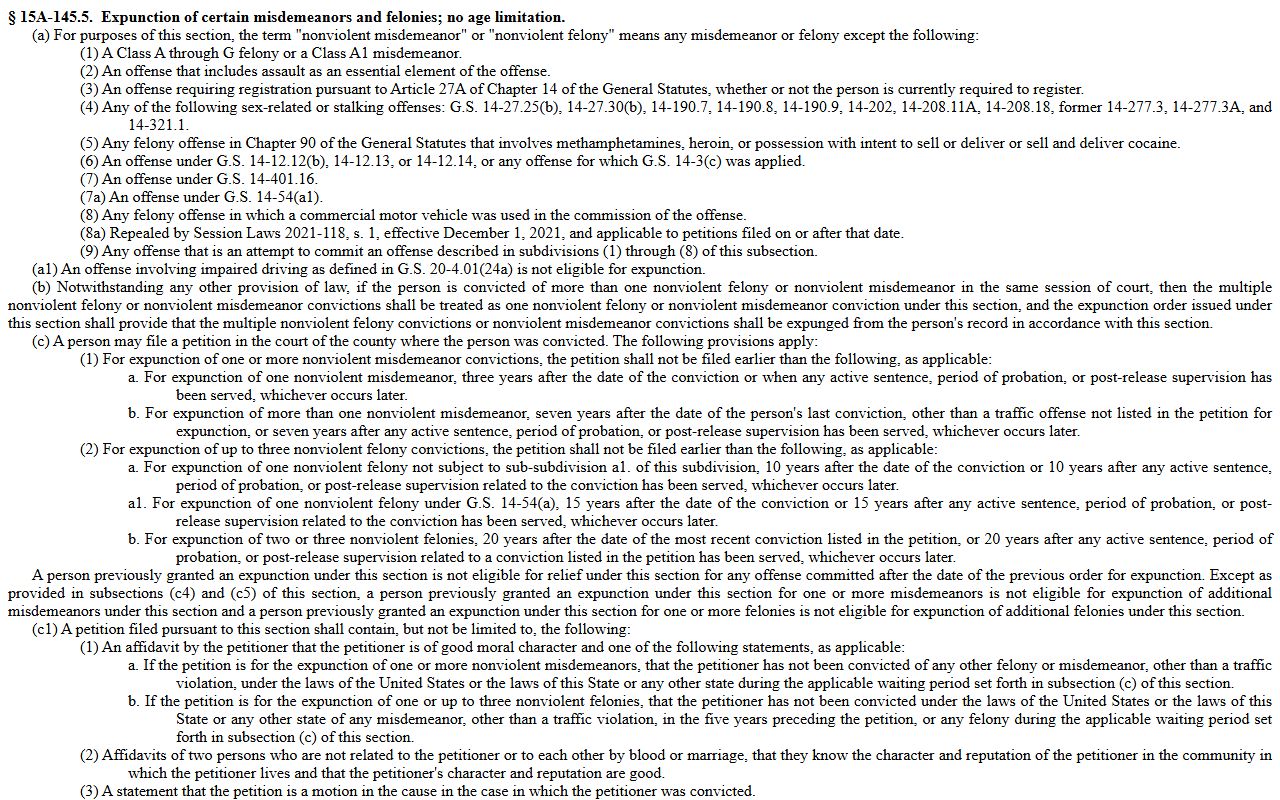
The nonviolent misdemeanor and felony expunction statute is a key source for Duplin County criminal record-clearing questions.
The N.C. Judicial Branch release on Chief Public Defender Niccoya Dobson gives local context for Defender District 5 and appointed counsel in Duplin County criminal matters.
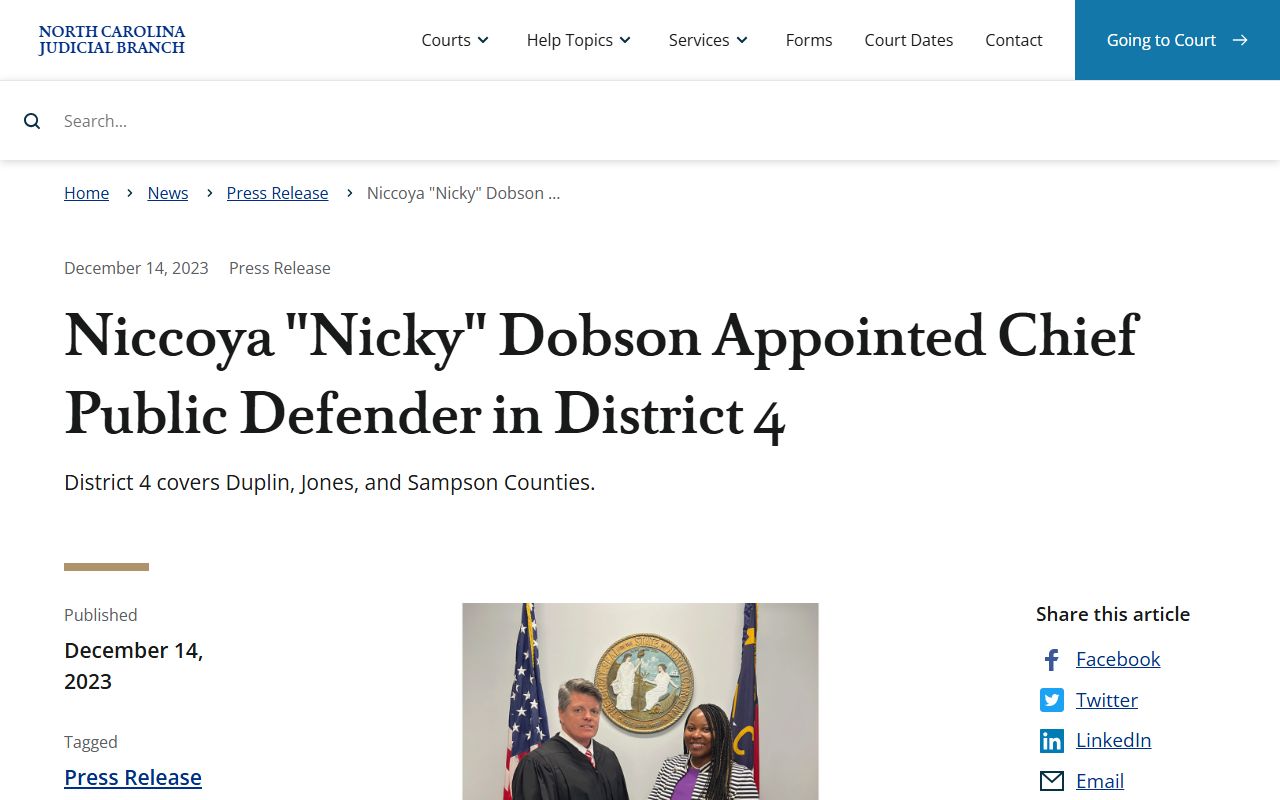
Chief Public Defender information does not replace court records, but it helps identify the official appointed-counsel system for qualifying defendants.
The official expunction eligibility statute gives statewide rules that apply to Duplin County criminal records.
Eligibility still depends on the exact charge, disposition, prior record, waiting period, and court order.
Duplin Criminal Background Checks
A casual case lookup is not the same as a formal background check. The N.C. Judicial Branch criminal background check topic directs users to the clerk's office for county criminal background checks. Portal results can help locate case numbers and dispositions, but they may not be complete enough for legal use, employment screening, licensing, or official clearance. A certified copy should come from the Clerk of Superior Court when a court-certified record is required.
Important: Online criminal court record information is not a consumer report and cannot be used for FCRA-regulated screening decisions.
Restricted Duplin Criminal Records
Some Duplin County criminal court records are not public in full. Juvenile delinquency and undisciplined records are governed by Chapter 7B and are not ordinary adult criminal files. Abuse, neglect, dependency, adoption-related, and certain mental-health records are also restricted. Public records may redact Social Security numbers, protected addresses, financial account data, minor names, and other sensitive identifiers.
Sealed search warrants, ongoing investigation materials, and law-enforcement intelligence records are not the same as public court case summaries. If a Portal case appears incomplete, the omission may be due to redaction, a sealed entry, a confidential case type, or a timing issue. For official confirmation, contact the Clerk of Superior Court at (910) 275-7000 or visit the courthouse public terminals during posted courthouse hours.