
Search Duplin County Court Records Online
Current Duplin County court records are searched online through the North Carolina eCourts Portal. The Portal is the statewide public entry point for Smart Search, Search Hearings, Make Payments, and NC Judgment Search. For Duplin County court records, Smart Search is the broad case lookup tool. It can show a near real-time case summary, also called the Register of Actions, when the record is public and available in the system.
The Portal requires JavaScript, cookies, and periodic CAPTCHA checks. Public users may search without creating an account, but registration lets a user save cases. It does not expand public access by itself. Case-specific questions still go back to the Clerk of Superior Court in the county where the case is assigned. In Duplin County, the clerk is the Clerk of Superior Court at the Duplin County Courthouse.
The official Portal training and resources page identifies Smart Search as the case-record tool and explains that judgment searches should be paired with Smart Search for a fuller view of civil judgment information. A Duplin County court records lookup should begin with the known case number when possible, because names can produce many similar results.
- Open the eCourts Portal and choose Smart Search.
- Enter a record number or a name in last, first middle suffix format.
- Use advanced filters to limit the location to Duplin County when the option is available.
- Open the matching case summary and review case information, parties, events, hearings, dispositions, and financial fields.
- For a certified copy, older paper file, or official background check, contact the Clerk of Superior Court instead of relying on the online summary.
Duplin County Court Records Search Fields
Smart Search accepts broad and filtered searches. The research capture found name, record-number, location, party, date, and case filters. Wildcards have limits, so a Duplin County court records search should use enough letters or digits to meet the Portal's format rules. If a person has multiple names, search each known name and then confirm the case number, county, and party role before treating a result as the correct record.
| Field Label | Type | Required | Notes / Format |
|---|---|---|---|
| Enter a Record Number or Name in Last, First Middle Suffix Format | Text | Yes, one or more criteria | Search by record number or name; wildcard case-number searches need at least four characters, and name wildcards need minimum last-name and first-name characters before the asterisk. |
| Last Name, First Name, Middle Name, Suffix | Text and dropdown | Conditional | Used for party-name searches; middle name and suffix narrow common-name results. |
| Filter by Location | Dropdown/list | No | Can include Duplin County, other eCourts counties, and All Locations. |
| Search by | Radio/list | No | Party Name, Nickname, Business Name, or Sounds Like. |
| Filter by Date of Birth From / To | Date | No | Helps distinguish people with similar names when DOB access is available. |
| Filter by Case Type and Case Status | Dropdown | No | Used to narrow civil, criminal, family, estate, special proceeding, and other case types. |
| Filter by File Date Start / End | Date | No | Limits Duplin County court records by filing date range. |
The official File & Serve training page is useful for understanding the eCourts environment behind newer filings. Duplin County court records users should keep search and filing tools separate: File & Serve is for electronic filing by registered users, while Portal Smart Search is the public lookup path.
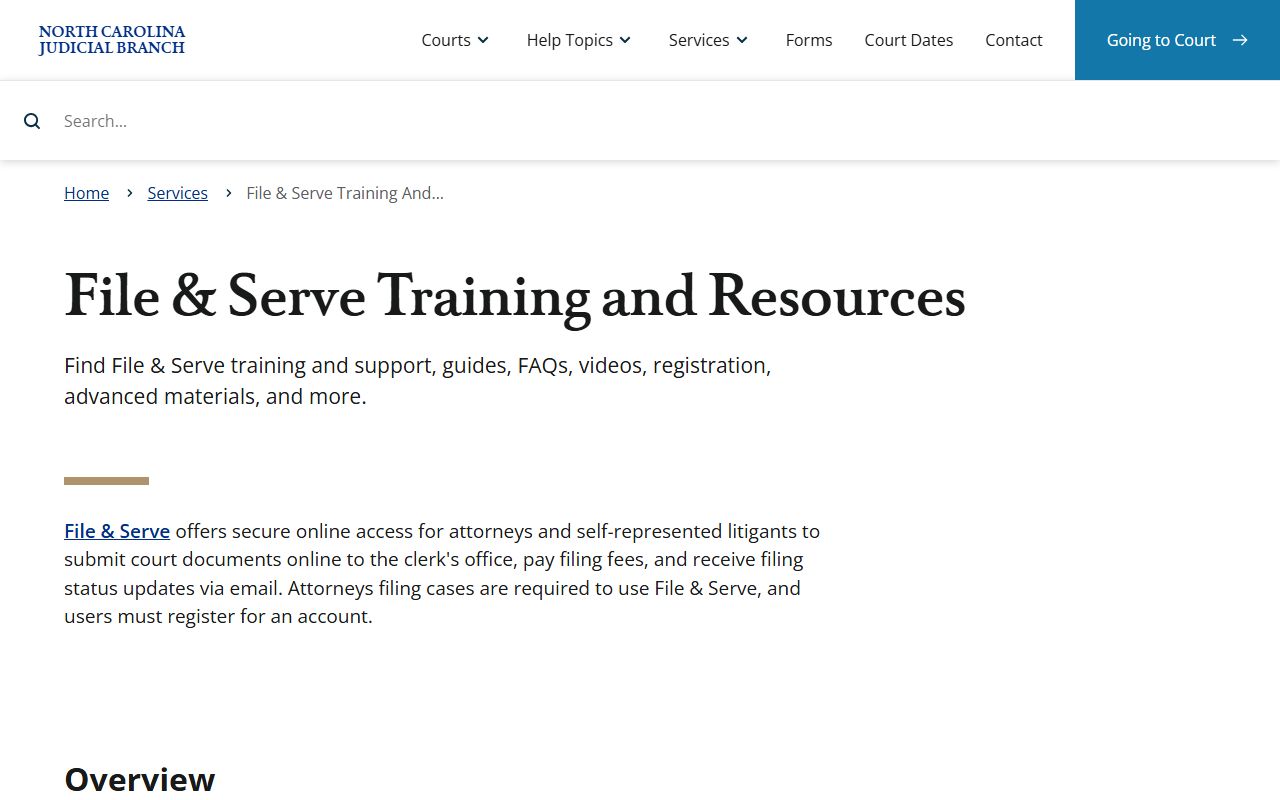
That eFiling context matters because Duplin County joined the eCourts environment, but public case access still depends on the Portal, clerk terminals, and the public-access limits tied to each record type.
Types of Duplin County Court Records
Duplin County court records are not all held in one kind of file. Superior Court handles felony criminal cases, civil cases involving $25,000 or more, and appeals from District Court. District Court handles misdemeanors, infractions, traffic matters, domestic and family cases, juvenile matters, small claims, and lower-value civil cases. Estates and special proceedings are handled through the Clerk of Superior Court rather than a separate probate court.
The Clerk of Superior Court is also the main courthouse office for public terminals, paper case files, copies, cashier functions, and official background checks. The Duplin County Register of Deeds is a different office and should be used for marriage licenses, birth and death certificates, deeds, maps, plats, and other land records. Sheriff Stratton F. Stokes and the Duplin County Sheriff's Office handle sheriff and jail records, but jail booking records are not the same as court case files.
- Civil records may include complaints, answers, motions, orders, judgments, dismissals, hearing calendars, and cost entries.
- Criminal records may include charging documents, pleas, motions, bond conditions, dispositions, sentences, probation terms, restitution, and costs.
- Family records can include divorce, custody, child support, equitable distribution, and protective-order cases, subject to redaction or access limits.
- Estate and special proceeding records may include wills, applications, inventories, letters, accountings, notices, orders, and clerk rulings.
- Traffic and infraction records can show citation numbers, charges, court dates, waiver eligibility, dispositions, fines, costs, and compliance outcomes.
What Duplin County Court Records Show
A Smart Search case summary may include case information, assignment information, party information, causes of action, case events, dispositions, hearings, and financial information when applicable. These fields help show what happened in court, but they do not always replace the paper file. Some documents may need to be viewed at the clerk's office in the county where the case is located.
| Field | What It Shows |
|---|---|
| Case Number | The Odyssey format, such as 21CR000003-910, with year, case type letters, sequence number, and county identifier. |
| Court / Location | Duplin County and the proper division, such as Superior Court District 5 or District Court District 5. |
| Parties | Names and roles such as defendant, plaintiff, petitioner, respondent, estate, decedent, attorney, agency, or business. |
| Events and Hearings | Register of Actions entries such as motions, notices, continuances, orders, pleas, hearings, and scheduled court dates. |
| Disposition | The outcome of a charge, claim, judgment, dismissal, plea, or case when public and available. |
| Financial Fields | Court costs, fines, restitution, attorney fees, probation or parole fees, payment status, and balances when applicable. |
| Access Limits | Redactions, sealed records, expunged records, juvenile limits, and restricted personal identifiers. |
Public Access to Duplin County Court Records
North Carolina public-record law starts with N.C. Gen. Stat. 132-1, which defines public records broadly for public agencies and subdivisions. Court records also have a specific clerk-record rule in N.C. Gen. Stat. 7A-109, which requires clerks to maintain court records, files, dockets, and indexes and makes them open to public inspection during regular office hours unless the law says otherwise.
For Duplin County court records, the practical route is not just a public-record request. Start with Portal for online case summaries and hearing information. Use public terminals in the Clerk of Superior Court's office for criminal, civil, special proceeding, and estate case information. Ask clerk staff about paper files and copies when the online summary does not show enough detail. Use the Judicial Branch public-record request path for Judicial Branch administrative records, but note that case-file requests are usually routed back to Portal or the clerk.
The N.C. public records definition is a broad starting point, but court users need the more specific clerk and confidentiality rules before assuming a record is fully open.
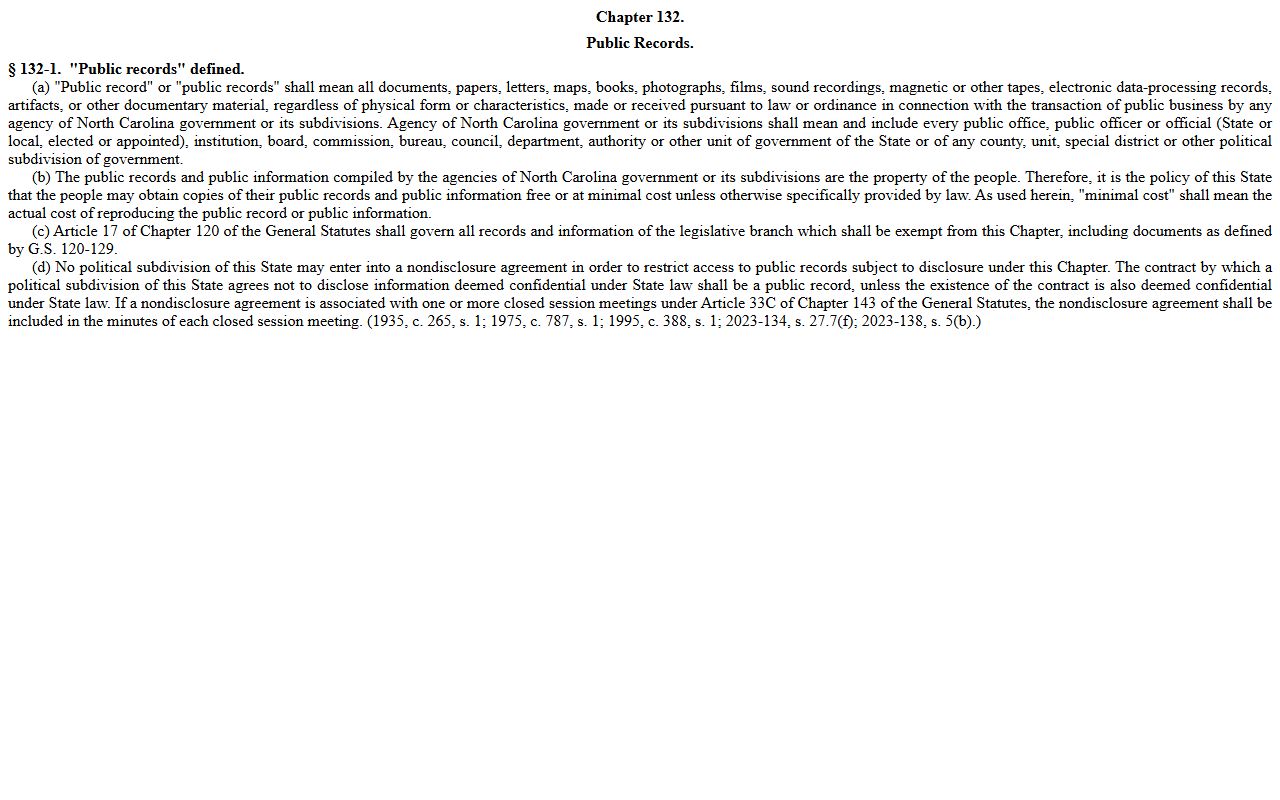
This statute supports public access, while the court-record rules explain why some case details must still be checked with the Duplin County Clerk of Superior Court.
Note: Public access does not mean every case document is online, certified, or free from redaction.
Restricted Duplin County Court Records
Some Duplin County court records are restricted even when a case exists in the court system. Juvenile delinquency, undisciplined, abuse, neglect, dependency, and adoption-related records are not ordinary public files. Sealed cases may be blocked by court order. Expunged records are treated differently from dismissals because expunction is meant to clear public entries for qualifying arrests, charges, or convictions.
North Carolina law also limits criminal investigation and intelligence records held by law enforcement. That distinction matters when a court case overlaps with a sheriff report, jail booking, or investigation by the Duplin County Sheriff's Office. A case disposition may be public in court records, while investigative details may remain unavailable through sheriff channels.
The official N.C. Judicial Branch expunction topic explains the state process for clearing qualifying records. A Duplin County expunction filing generally belongs in the county where the charge was handled, which means the Duplin County Clerk of Superior Court for local cases.
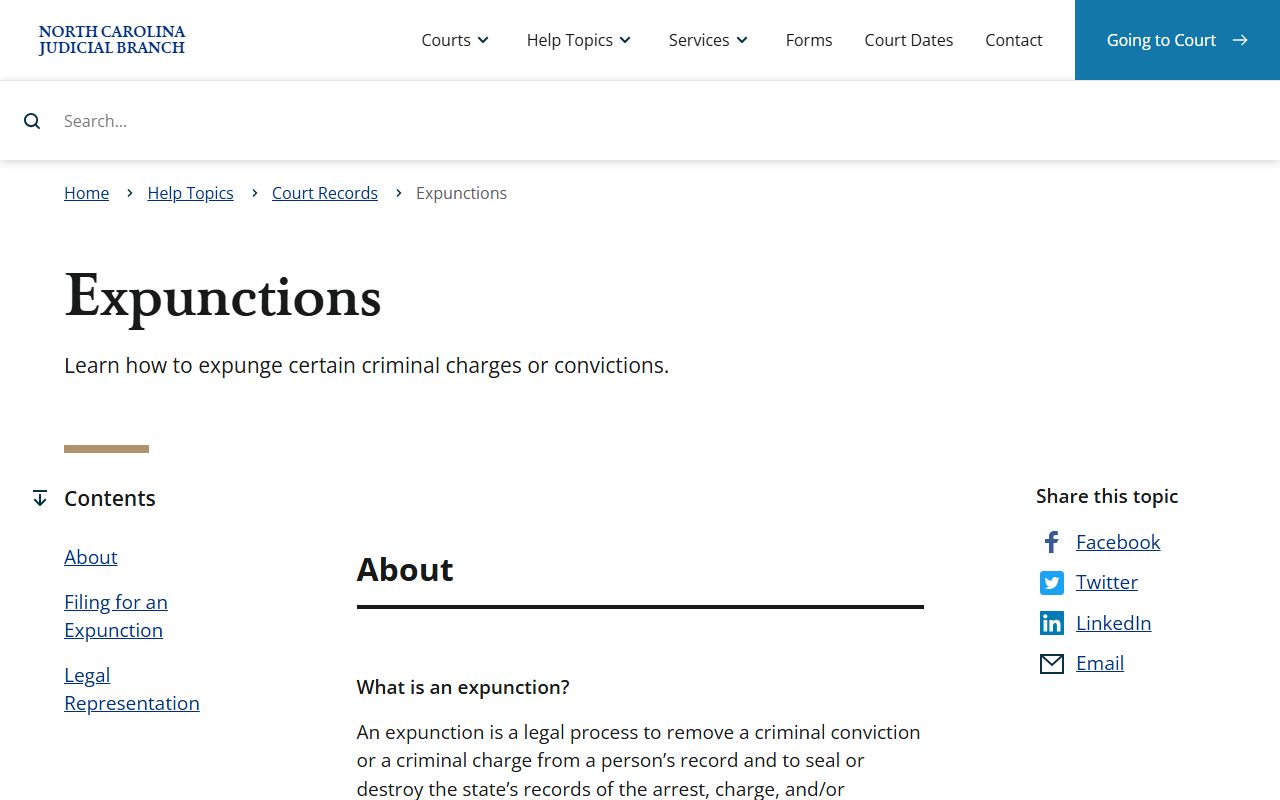
Expunction is not the same as a not-guilty result or dismissal, so a person checking Duplin County court records should verify whether a separate expunction order exists.
Duplin County Court Record Requests
In-person access remains important for Duplin County court records. The official court-records help topic says criminal case information can be searched on a public self-service terminal in any clerk's office by defendant name, case number, or victim or witness name. Civil, special proceeding, and estate case information can also be accessed on public terminals. Paper files must be viewed at the clerk's office in the county where the case is located.
For Duplin County, that office is in Kenansville. Clerk staff can provide copies for a fee, but the research file did not locate a Duplin-specific copy fee schedule. Use the current statewide court-cost publications or confirm the amount with the clerk before mailing payment. For official criminal background checks, the Judicial Branch warns users to work through the county clerk's office rather than the Portal.
The Judicial Branch Duplin County court landing page routes users to local court services, while the Duplin County contact directory lists courthouse, clerk, magistrate, judge, district attorney, and Guardian ad Litem contacts. Payment questions should use the official Duplin County payment information page before money is mailed or taken to the cashier.
Duplin County Clerk of Superior Court
Duplin County Courthouse
112 Duplin St.
Kenansville, NC 28349
(910) 275-7000
Monday-Friday, 8:30 a.m.-5:00 p.m.